Calm Your Mind: Short Guided Meditations for Anxiety
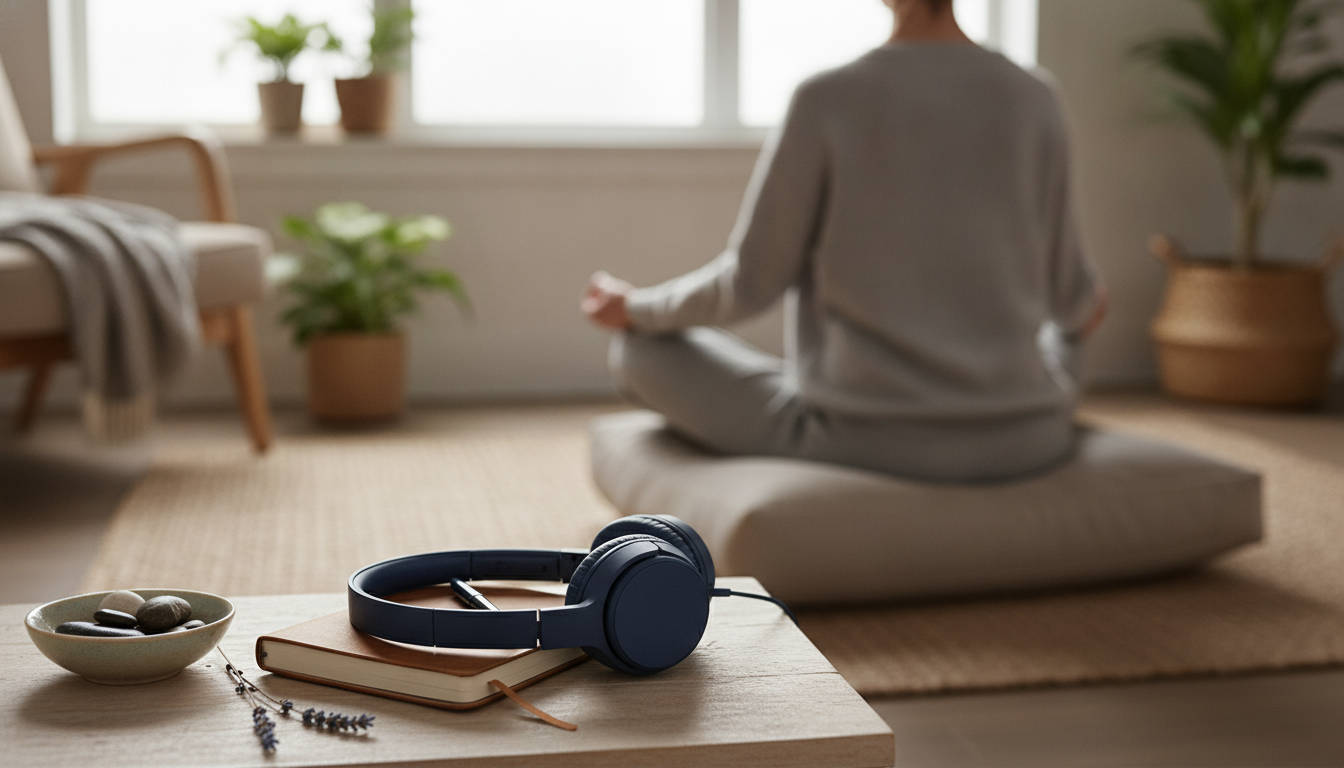
Calm Your Mind: Guided Meditation Audio Course for Anxiety Relief
Racing thoughts, a tight chest, and a restless body can make even simple days feel heavy. A short, consistent guided practice can help shift the nervous system toward steadiness—without needing prior meditation experience. This audio series is designed for listeners who want practical, repeatable sessions that fit into real schedules, whether the goal is easing worry, improving sleep, or finding a calmer baseline.
What This Guided Series Helps With
Anxiety often shows up as both mental noise and physical discomfort. Guided sessions can make it easier to “step out” of the spiral by giving your attention something simple and specific to follow.
- Helps interrupt spiraling thoughts by anchoring attention in breath and body cues
- Supports relaxation responses that can feel harder to access during anxious moments
- Builds a simple routine that is easier to maintain than long, silent sits
- Useful for winding down, managing daytime stress, and resetting after overwhelm
- Approachable pacing and guidance for beginners and returning meditators
How Guided Meditation Can Ease Anxiety
Guided meditation doesn’t “erase” stress, but it can change your relationship to it—especially when the practice is brief, repeatable, and easy to return to.
- Guided attention reduces mental clutter by providing a clear focal point when the mind feels scattered.
- Breath-led pacing supports regulation by encouraging slower breathing patterns and easing physiological arousal.
- Body scanning builds awareness of where tension is hiding (jaw, shoulders, belly), creating a pathway to soften it.
- Compassion-based prompts reduce self-criticism that can intensify anxious loops.
- Repetition trains familiarity—the mind learns what “calm” feels like and how to return more quickly.
For additional background on how meditation supports stress relief, see the Mayo Clinic overview on meditation for stress reduction and the American Psychological Association’s summary of mindfulness research.
A Simple Listening Routine (5–15 Minutes)
Consistency matters more than duration. A short session you actually repeat tends to help more than a long session you avoid.
- Pick a consistent time: morning start, midday reset, or bedtime wind-down.
- Use headphones if possible; keep volume low enough to stay comfortable.
- Repeat one session for several days before switching tracks so your body learns the pattern.
- If anxiety spikes, shorten the session and focus on just the first minute of breathing.
- Pair the habit with an existing cue (after brushing teeth, before coffee, after work).
Quick schedule ideas based on how the day feels
| Situation | Session length | Best focus | When to use |
|---|---|---|---|
| Racing thoughts | 5–8 min | Breath counting + grounding | As soon as spiraling starts |
| Body tension | 8–12 min | Body scan + release prompts | Midday or after meetings |
| Overstimulation | 5–10 min | Sound anchoring + slow exhale | After screen time or commuting |
| Trouble falling asleep | 10–15 min | Progressive relaxation | 30–60 minutes before bed |
What’s Included in Calm Your Mind
Calm Your Mind: Guided Meditation Series | Audio Course | Anxiety Relief Meditation is built for real-life listening—short sessions, supportive cues, and a structure that encourages repeat practice without feeling overwhelming.
- A guided audio course designed to support anxiety relief and everyday calm
- Listen-at-your-own-pace format for flexible scheduling
- Session structure that encourages repeat practice without pressure
- Digital-friendly use: suitable for home, office breaks, or travel
- A gentle approach that prioritizes comfort, safety, and steady progress
If you like pairing a calming habit with a “friction-free” setup, a reliable charge can help keep sessions uninterrupted while traveling or during long days. The 200000mAh 120W Power Bank for iPhone and Apple Devices is a simple add-on for listening on the go.
Who It’s For (and When to Choose a Different Support)
This series is a strong fit if you want guidance, simplicity, and a routine you can repeat even when you’re not feeling your best.
- Good fit for beginners who prefer guidance rather than silent meditation
- Helpful for people who feel tense, restless, or stuck in worry loops
- Works well for those building a consistent habit with short sessions
- Not a substitute for professional care; seek clinical support if anxiety is severe, persistent, or includes panic that feels unmanageable
- If trauma triggers arise during meditation, consider trauma-informed guidance and professional support
Mindfulness-based approaches are also widely used in structured programs like MBSR (Mindfulness-Based Stress Reduction). For an evidence-informed overview, the National Center for Complementary and Integrative Health (NCCIH) MBSR resource is a helpful reference point.
Tips to Get More Relief From Each Session
Small technique shifts can make the same track feel noticeably more settling—especially during anxious moments.
For many listeners, comfortable audio makes it easier to stay with the practice. If you use earbuds daily, protecting and organizing them can reduce the “where did I put them?” stress that derails routines. Consider the Leather Texture TPU Case for Apple AirPods 1/2/3/Pro or the Silicone Case for Apple AirPods 4, AirPods Pro 2, AirPods 3 for a simple grab-and-go setup.
Product Details and Availability
FAQ
How often should guided meditation be used for anxiety relief?
A steady baseline of 5–10 minutes daily is a practical starting point, with optional extra sessions during stressful moments. Benefits often build over 2–4 weeks as the routine becomes familiar and easier to access under pressure.
Can guided meditation help during a sudden anxiety spike?
Yes—use a shorter track, ground through the senses (feel your feet, notice sounds), and lengthen exhales while choosing a safe, supported posture. It can help regulate your body’s stress response, but it may not replace medical help if symptoms feel severe or unmanageable.
Is it okay to fall asleep during the sessions?
Yes, especially if you’re using a bedtime track—settling the nervous system is still beneficial. For daytime practice, try sitting up or reducing comfort cues so you can stay gently alert.
















Leave a comment