Small Space Layouts: Multifunctional Rooms, Less Clutter

Maximize Function, Minimize Clutter: Multifunctional Room Layouts That Make Small Spaces Feel Effortless
When a room has to do double (or triple) duty—work, relax, host, store—clutter isn’t a “stuff problem.” It’s usually a layout problem. The goal isn’t to own less overnight; it’s to give every activity a clear home, keep pathways open, and choose pieces that earn their footprint. Our team uses a simple system for multifunctional room layouts, plus space-saving furniture and smart home ideas that keep daily life streamlined—so you can move through your day without constantly rearranging piles.
The real reason small spaces get messy: too many jobs, not enough zones
A room gets chaotic when multiple activities compete for the same surfaces and floor space. Start by naming the room’s “jobs,” then build zones that support how you actually live.
- List the 3–5 things the room must do. Sleep, work, dining, workouts, kids’ play, hosting—your jobs decide the layout, not the other way around.
- Define success with one sentence per job. Example: “Work zone closes in under 60 seconds at the end of the day.” This prevents buying storage that doesn’t support your routines.
- Prioritize circulation first. Keep the main walking lane open, then place large items along edges so the center stays flexible.
- Choose fewer, stronger zones. One transformable zone that flips fast beats three cramped corners you avoid using.
Safety note: clear circulation also supports quicker exits in an emergency; the National Fire Protection Association shares practical basics for home escape planning.
NFPA — Home Escape Planning Basics
A simple layout method: anchor, edge, and flip
When you’re not sure where to begin, use this three-part method. It keeps decisions simple and prevents “layout drift,” where furniture slowly creeps into pathways.
- Anchor: Choose one primary piece that sets the room’s purpose (sofa, bed, desk). Place it where it supports your most-used activity without blocking doors or daylight.
- Edge: Run storage and tall items along the perimeter. This reduces visual noise and protects open floor area.
- Flip: Add 1–2 elements that change modes quickly—nesting tables, a wall-mounted drop-leaf desk, a storage ottoman, or a foldable dining surface.
Try a timer test: if switching from one mode to another takes longer than 2 minutes, simplify. Fewer components, closer storage, and a one-step setup almost always wins.
Multifunctional room layouts that feel natural (not cramped)
Living room + office
Put your desk on a “quiet edge,” not the main walkway. A slim desk plus cable control makes the workspace feel intentional, and a closed bin or cabinet lets you shut down visually after hours. If you do a lot of data entry, a small add-on tool can reduce friction without requiring a bigger desk footprint—our team often pairs compact desks with the Wireless Bluetooth Backlit Number Pad for Apple Devices to keep the main setup minimal.
Studio sleep + lounge
Avoid floating “islands” that chop up floor space. Align bed/sofa edges so the room forms a clean rectangle of usable floor and one consistent walking lane. A single flip surface (like a drop-leaf table) can handle dining, laptop work, and hobbies without forcing you to add multiple side tables.
Dining + homework/crafts
Let the table be the anchor, then store supplies vertically nearby so the tabletop clears fast. Use trays to group small items, or a rolling cart that parks out of sight. The goal: cleanup is a one-trip reset, not a scavenger hunt for scattered supplies.
Entry + storage
Treat the entry like a micro-zone with three elements: a landing surface, hooks, and one closed container. This creates a repeatable reset point so clutter doesn’t migrate into the living area.
Space-saving furniture that earns its footprint
Quick match guide: room type → layout move → high-impact furniture
| Room + extra function | Layout move that reduces clutter fast | Space-saving furniture to prioritize |
|---|---|---|
| Living room + office | Keep desk on an edge; route cables to one hidden power hub | Slim desk, closed cabinet, storage ottoman |
| Bedroom + workout | Protect a clear floor rectangle; store gear vertically | Wall hooks, under-bed bins, foldable mat rack |
| Studio (sleep + lounge + dining) | One anchor zone + one flip zone; keep pathways clear | Drop-leaf table, nesting tables, bench with storage |
| Kitchen + dining nook | Use corners; avoid crowding the main prep path | Corner banquette storage, wall rail system, rolling cart |
Smart home ideas that cut visual noise (and decision fatigue)
U.S. Department of Energy — Smart Thermostats
A 7-day reset that sticks (small steps, big payoff)
Put it all together with the layout guide (so every room works harder)
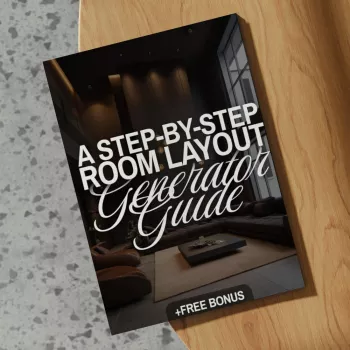
If you want a room-by-room playbook you can follow without overthinking, our team built Maximize Function, Minimize Clutter | Multifunctional Room Layouts eBook to help you map functions, choose a layout pattern, and select pieces that support real routines.
CDC — Ergonomics and Musculoskeletal Health (Workplace Basics)
FAQ
What’s the best first step to reduce clutter without buying new storage?
List the room’s top functions, then clear and protect the main pathways before you organize anything. Choose an anchor piece and create 1–2 zones, then corral loose items into temporary category bins so you can assign them homes based on real routines.
How can one room work as both an office and a relaxing space?
Keep work on an edge, use closed storage, and set up a quick close-down routine so the room can flip modes fast. When you can pack work away in under two minutes, your brain stops reading the whole room as “unfinished.”
Which space-saving furniture gives the biggest impact in a studio or small apartment?
Prioritize flip surfaces (drop-leaf or nesting tables), closed storage pieces, and vertical organizers. Choose items that support your top two room functions first, then refine with smaller additions only after the layout feels stable.











Leave a comment