Printable Cat Body Language Cheat Sheet: Decode Signals
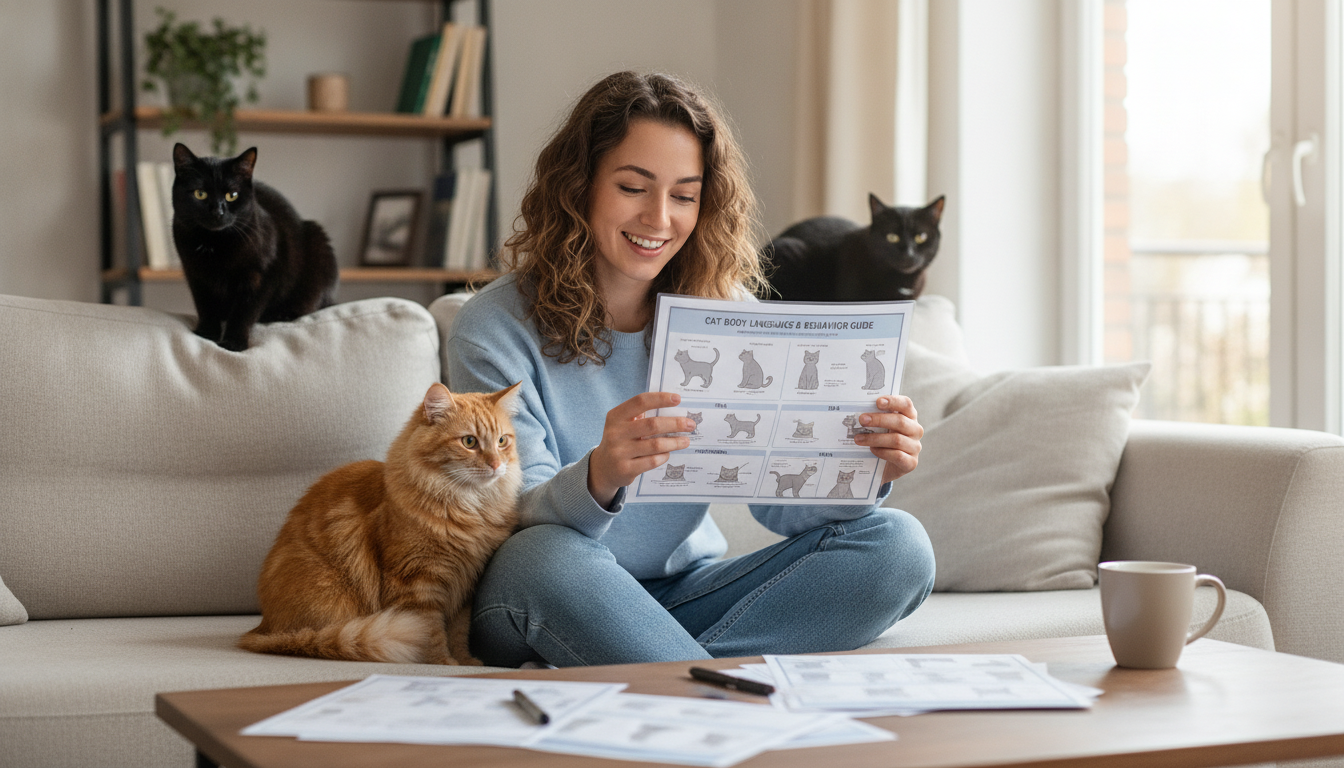
Cat Body Language & Behavior Cheat Sheet: A Printable Guide to Feline Signals, Postures, and Meows
Cats communicate constantly through posture, tail and ear positions, eyes, whiskers, movement, and vocalizations. A quick-reference cheat sheet helps decode what a cat is feeling in real time—useful for bonding, reducing stress, preventing bites/scratches, and making handling, play, and introductions smoother.
For deeper background reading, reputable guides from International Cat Care (iCatCare) and the ASPCA pair well with a simple “at-a-glance” printout you can keep on your fridge.
How cats communicate: reading the whole picture
The fastest way to misread a cat is to focus on a single cue. A cat can purr and still be tense, or hold a friendly-looking tail while the rest of the body says “back off.” Instead, read the full snapshot.
- Combine signals instead of relying on one behavior (for example, purring + stiff body + sideways ears often means stress, not cuddles).
- Start with context: where the cat is (carrier, vet lobby, windowsill), what just happened (doorbell, new pet, vacuum), and the cat’s baseline personality.
- Scan in a consistent order: overall posture → tail → ears → eyes → whiskers → vocalizations → movement speed.
- Watch changes over time: escalating tension often looks like freezing, wide eyes, tail twitching, and then swatting or fleeing.
Core body postures and what they usually mean
Posture is your “headline.” Once you identify it, the tail/ears/eyes add detail.
- Relaxed/comfortable: loose muscles, normal breathing, sitting or loafing, slow movements. Often open to gentle interaction.
- Alert/curious: upright posture, forward ears, still body, tail held steady. Common during play or when investigating a sound.
- Anxious/uncertain: crouched body, weight shifted low, scanning, hesitant steps. Give space and provide a safe retreat.
- Defensive fear: arched back, puffed fur, sideways stance, hissing. The goal is to look bigger and avoid contact.
- Offensive aggression: body forward and stiff, direct stare, ears angled back, low growl. Don’t reach in; end interaction calmly.
- Pain/discomfort indicators: hunched posture, guarding a body part, reduced grooming, hiding, irritability. If persistent or sudden, consider a veterinary check.
Tail, ears, eyes, and whiskers: fast clues for mood
These features change quickly, making them especially helpful during petting, play, and introductions.
- Tail: upright with a gentle curve often signals friendly confidence; a low tucked tail suggests fear; rapid thrashing can indicate agitation or overstimulation.
- Tail tip language: a softly moving tip can mean focused interest; sharp, repetitive flicks often appear right before swatting or darting away.
- Ears: forward = interested; sideways “airplane ears” = uneasy; pinned back = fear or aggression; swiveling ears = monitoring multiple sounds.
- Eyes: slow blinking is commonly associated with relaxation; wide eyes and dilated pupils can signal fear, arousal, or play—use the rest of the body to interpret.
- Staring vs. soft gaze: a hard stare can be a challenge; a soft gaze with relaxed lids is generally non-threatening.
- Whiskers: forward and fanned = engaged/hunting interest; pulled back or flat = nervous or defensive; neutral whiskers often match a calm baseline.
Meows, purrs, chirps, hisses, and growls: what vocalizations can signal
The quick-reference cheat sheet table (printable-friendly)
| Signal | What it can mean | Best response |
|---|---|---|
| Slow blink, relaxed body | Comfort and trust | Slow blink back; approach gently |
| Tail upright with soft curve | Friendly confidence | Offer greeting; allow sniffing |
| Tail lashing or sharp flicks | Overstimulation or irritation | Pause petting/play; give space |
| Ears sideways (“airplane”) | Uneasy or conflicted | Lower intensity; reduce noise/handling |
| Ears pinned back, stiff body | Fear or aggression | Do not reach in; create distance |
| Crouched, tucked tail | Fear; wants to avoid | Provide hiding spot; avoid forcing contact |
| Arched back, puffed fur, hissing | Defensive fear display | Back away; remove trigger if possible |
| Whiskers forward, focused stare | High interest/hunting mode | Redirect into wand-toy play |
| Purring with tense posture | Possible stress or discomfort | Stop handling; observe; consider vet if ongoing |
| Kneading, relaxed posture | Contentment/soothing behavior | Allow; provide soft blanket or lap time |
Using a printable guide at home: practical routines
Printable Cat Body Language & Behavior Cheat Sheet
- Cat Body Language & Behavior Cheat Sheet (Printable) — a quick-reference communication guide for common signals, postures, and vocalizations.
- 200000mAh 120W Power Bank for iPhone and Apple Devices — helpful for keeping your phone charged if you store the guide digitally for on-the-go check-ins during travel or vet visits.
Compare related options such as Premium Leather Magnetic Case for Apple iPhone to match features, dimensions, and use case before choosing.
FAQ
Why does a cat purr and still seem upset?
Purring can happen during comfort, but it can also show up during stress or pain. Check the full body picture—stiff posture, pinned/sideways ears, tail flicks, hiding, appetite changes, or sensitivity are clues that the cat may not be relaxed. If those signs persist or appear suddenly, a vet visit is a good next step.
What does it mean when a cat’s tail is flicking while being petted?
Tail flicking during petting often signals rising overstimulation or irritation. Pause your hand, give the cat space, and restart only if the body looks relaxed; shorter sessions and chin/cheek strokes are often better tolerated than full-body petting.
How can a printable cheat sheet help with introducing cats?
A printable guide helps you catch early stress signals (hard staring, blocking, pinned ears, growls) before a meeting escalates. Reward calm body language, increase distance when tension rises, and separate cats proactively so each interaction ends on a stable note.
















Leave a comment