Passive Income Roadmap: Build Wealth with One System
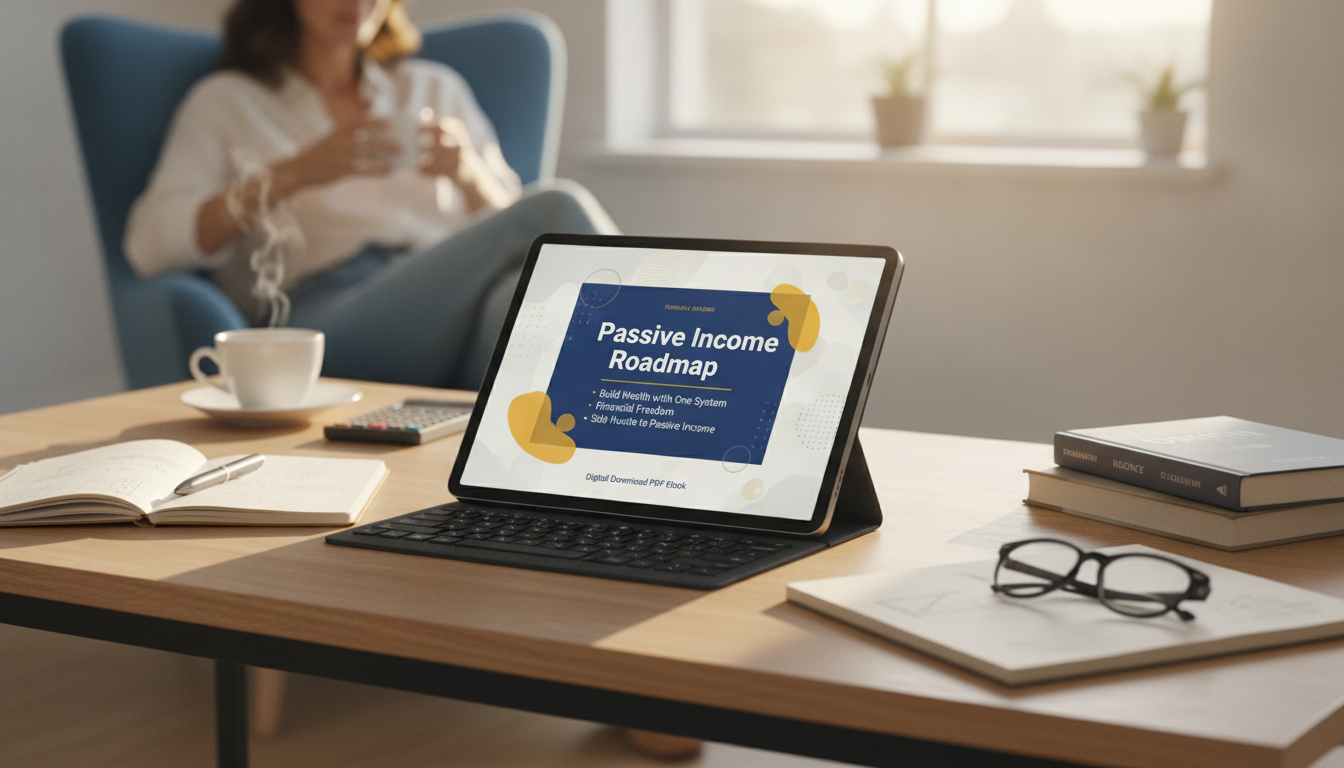
Build Wealth with Passive Income: A Beginner-Friendly Roadmap from Side Hustle to Systems
Passive income becomes realistic when it’s treated like a buildable system: pick one method, validate it, set up repeatable steps, track results, and reinvest. Instead of chasing “easy money,” a better target is predictable income that takes less time per dollar as your asset matures. The roadmap below breaks the process into simple phases and decision points, with practical ideas that fit beginners and a planner-style approach to keep momentum.
What “Passive” Income Usually Looks Like in Real Life
Most “passive” income streams begin actively. There’s learning, setup, creation, and marketing before anything becomes low-maintenance. The real goal is not “zero work forever,” but “less time per dollar over time,” where your effort gradually shifts from building to light upkeep.
Common passive structures fall into three buckets: assets that pay (interest/dividends), systems that sell (digital products and automated funnels), and processes that rent out (equipment, space, or licensing). A quick test helps: if the income stops the moment your weekly effort stops, it’s mainly a side hustle; if it continues with minimal upkeep, it’s trending passive.
Also, risk and reward usually scale together. Higher predictability often means lower returns, while higher returns may require more skill, capital, or tolerance for volatility. For a helpful baseline on investing concepts, review Investor.gov’s Introduction to Investing.
Passive income types: time, cost, and upkeep comparison
| Income type | Typical upfront cost | Setup time | Ongoing upkeep | Best for |
|---|---|---|---|---|
| High-yield savings / CDs | Low | Low | Very low | Stability, emergency reserves |
| Dividend/Index investing | Medium | Low–medium | Low | Long-term builders with patience |
| Digital downloads (templates, guides) | Low | Medium | Low–medium | Creators who can package a repeatable solution |
| Affiliate content | Low | Medium–high | Medium | People willing to publish consistently |
| Rental / leasing (tools, space, vehicles) | Medium–high | Medium | Medium | Owners who can manage maintenance and risk |
A Simple 5-Stage Roadmap: From Idea to Income You Can Count On
Stage 1 — Pick a lane
Choose one income model based on your time, skills, and capital. Avoid stacking five new projects at once. One focused lane beats scattered effort, especially when you’re learning what works.
Stage 2 — Validate quickly
Confirm demand with lightweight proof: quick keyword/market research, a pre-sale, a small ad test, or direct outreach to potential buyers. The goal is to validate the promise and pricing before building a bigger asset.
Stage 3 — Build the asset
Create the product/system once with quality and clarity. Think checklists, onboarding steps, automation, and documentation so delivery stays consistent even when you’re busy.
Stage 4 — Create distribution
Stage 5 — Stabilize and scale
Beginner-Friendly Passive Income Ideas That Don’t Require a Huge Budget
- Digital downloads: planners, checklists, trackers, Notion/Sheets templates, mini-guides, printable worksheets, habit systems.
- Micro-courses and workshops: narrow outcomes (one problem, one promise) often outperform broad programs.
- Licensing simple assets: stock photos, icons, music loops, or design elements (volume and consistency matter).
- Affiliate partnerships: recommend tools you already use; stay focused on one audience and one problem.
- Cash management: automated saving, interest-bearing accounts, and short-term instruments create a low-effort base layer. The CFPB has practical guidance on budgeting and managing money.
- Entry-level investing approach: consistent contributions to diversified funds can be more sustainable than chasing individual picks.
The “One-Offer” Method: Turn a Side Hustle into a Low-Maintenance System
As income grows, pay attention to tax classification and recordkeeping. For a technical overview of “passive activity” rules, see the IRS guidance on Passive Activity Losses.
Planner-Style Execution: Weekly Checklist for Steady Progress
Using the Financial Freedom Roadmap eBook and Checklist as a Step-by-Step Guide
If a planner-style structure helps you stay consistent, use the Financial Freedom Roadmap PDF eBook and planner checklist as a practical guide: select a passive income path, map the setup steps, and follow the checklist so you don’t skip key pieces like delivery, automation, and tracking.
For creators building on the go, it can also help to keep your workflow reliable and uninterrupted with practical gear such as the 200000mAh 120W Power Bank for iPhone and Apple Devices or an everyday carry accessory like the Leather Texture TPU Case for Apple AirPods 1/2/3/Pro.
Suggested 4-week starter plan (beginner pace)
| Week | Goal | Key tasks | Output |
|---|---|---|---|
| 1 | Choose and validate | Pick one idea, define audience + problem, confirm demand with quick research and a draft offer | One clear offer statement |
| 2 | Build the first version | Create the PDF/template, write quick-start instructions, set up delivery and a basic sales page | Minimum viable product ready |
| 3 | Launch and learn | Post/promote through 1–2 channels, ask for feedback, refine pricing and positioning | First sales + insights |
| 4 | Systemize | Add FAQ, automate delivery emails, create a simple content schedule, document steps | Repeatable system |
Mistakes That Slow Down Passive Income (and What to Do Instead)
FAQ
How long does it take for passive income to feel reliable?
Most people can launch a small asset in a few weeks, but reliability usually takes months of consistent distribution and refinement. Expect weeks to set up, a few months to stabilize conversion and traffic, and longer timelines for compounding results through reinvestment.
What is the easiest passive income idea to start with as a beginner?
A simple digital download (like a checklist or template) is often the easiest because it’s low-cost and quick to ship. Validate the idea first by confirming people actively want the outcome, then build a minimum viable version and improve it with feedback.
Do digital downloads count as passive income?
They can become low-maintenance once creation, delivery, and follow-up are automated. Some upkeep remains—updates, occasional support, and ongoing marketing—but the product itself can keep selling without being rebuilt each time.
















Leave a comment