New Kitten Feeding Plan: Day-One Food to 12 Months
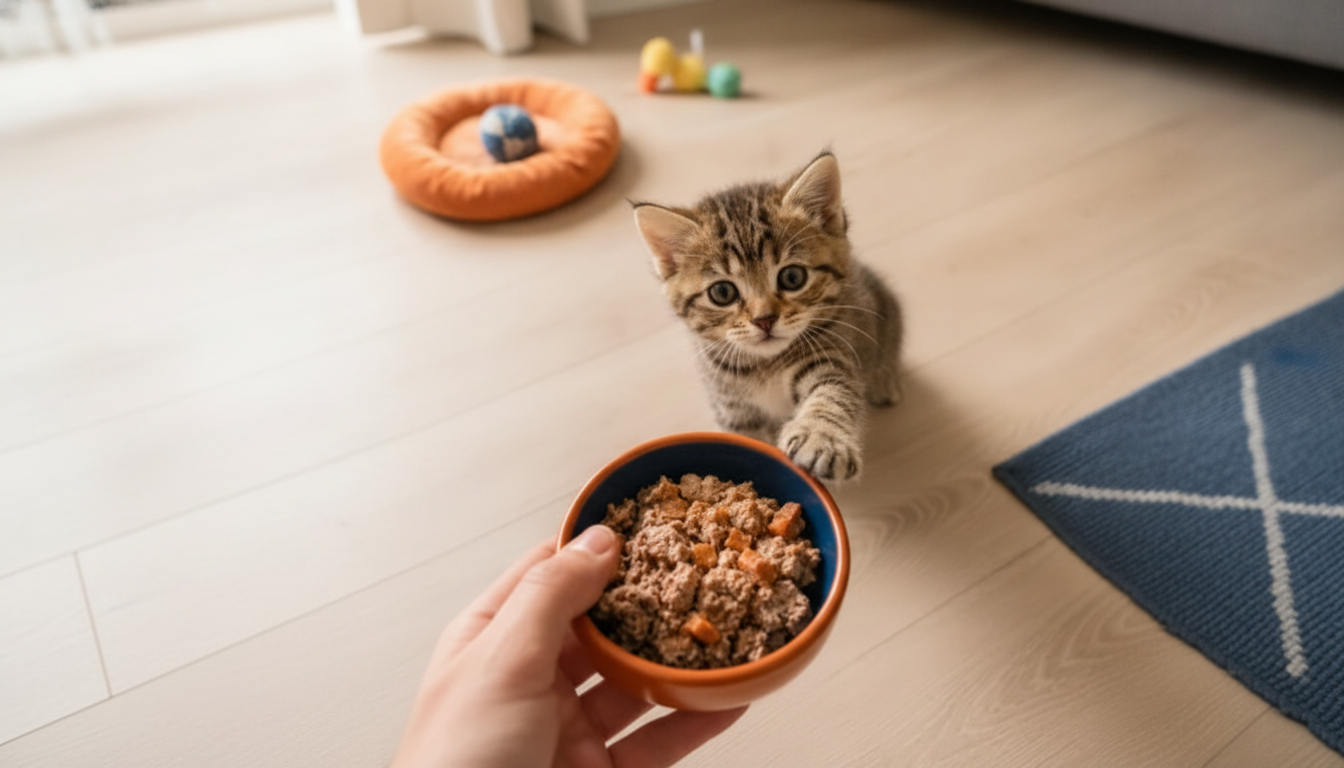
Feeding Your New Kitten Right: A Practical Start-to-Strong Nutrition Plan
A new kitten’s first weeks at home set the tone for lifelong health. The right food, portions, and feeding routine support steady growth, strong bones, healthy digestion, and calm, predictable mealtimes. Use the guidance below to choose an age-appropriate diet, build a simple schedule, and avoid common mistakes—especially during the transition from breeder/shelter food to a long-term plan.
Start With the Basics: What Growing Kittens Need
- Choose “complete and balanced” diets formulated for growth (kitten) or all life stages from reputable brands.
- More calories and protein than adult cats: kittens grow fast, play hard, and burn energy quickly.
- Key nutrients to look for: taurine (heart/vision), DHA (brain/eyes), an appropriate calcium/phosphorus balance (bones/teeth), and sufficient moisture (especially from wet foods).
- Avoid DIY or raw feeding unless a veterinary nutritionist formulates the recipe—nutrient gaps are common and can impact development.
- Fresh water always: place water away from the litter box; a fountain can help hesitant drinkers.
For additional nutrition basics and label-reading tips, the Cornell Feline Health Center is a helpful reference: Cornell University College of Veterinary Medicine — Feeding Your Cat.
What Food to Start With on Day One
- Match the breeder/shelter food for 3–7 days whenever possible to reduce stress and stomach upset.
- If the current diet is unknown, start with a highly digestible kitten wet food and optionally add a measured portion of kitten dry food. Adjust based on appetite and stool quality.
- Wet food supports hydration and is usually easier for young kittens to manage; dry food can add convenience if portion-controlled.
- For kittens under about 8 weeks (or orphaned), use kitten milk replacer (KMR) as directed. Avoid cow’s milk, which commonly triggers diarrhea.
- If appetite dips after the move, offer warm, aromatic wet food, keep the area quiet, and stick to predictable meal times.
Age-by-Age Feeding Schedule and Portions
Use the package feeding guide as a starting point, then adjust to your kitten’s body condition, energy level, and growth rate. A healthy kitten typically gains weight steadily without becoming pot-bellied or lethargic. Weigh weekly (same scale, same time of day) to confirm you’re on track.
Quick Feeding Guide for Common Kitten Ages
| Kitten age | Meals per day | Best format to prioritize | Notes |
|---|---|---|---|
| 6–8 weeks | 4–6 | Mostly wet (soft texture), optional soaked kibble | Transition gently from milk replacer if applicable; keep meals small and frequent. |
| 8–12 weeks | 4 | Wet + optional dry | Great time to build routine; introduce new textures slowly. |
| 3–6 months | 3 | Wet + dry (portion-controlled) | Growth is fast; reassess portions every 2–3 weeks. |
| 6–12 months | 2–3 | Wet-forward or mixed | Gradually shift toward an adult schedule near 12 months (later for some large breeds). |
If vomiting, diarrhea, or poor growth persists beyond 24–48 hours, contact a veterinarian promptly. For a broader life-stage framework, see American Animal Hospital Association (AAHA) — Guidelines.
How to Switch Foods Without Upset Stomachs
Most tummy trouble comes from switching too quickly. Plan a 7–10 day transition whenever changing brands, flavors, or formats.
- Days 1–3: 75% old + 25% new
- Days 4–6: 50% old + 50% new
- Days 7–9: 25% old + 75% new
- Day 10: 100% new
If stool softens, pause at the current ratio for 2–3 extra days. Avoid switching multiple variables at once (brand + protein + treat changes). Keep treats minimal until the main diet is stable.
Common Feeding Mistakes That Disrupt Growth and Mealtimes
- Free-feeding without measuring: can encourage overeating, picky behavior, and inconsistent growth.
- Too many treats: treats should be a small slice of daily calories; complete meals should do the heavy lifting.
- Adult cat food too early: may fall short on growth-focused energy and key nutrients.
- Milk, tuna-heavy diets, or table scraps: often lead to diarrhea, nutrient imbalance, and “hold out for people food” habits.
- Skipping texture variety: gentle exposure to different textures (pâté, minced, small kibble) can reduce fussiness later.
For additional guidance on evaluating diets and discussing nutrition with your veterinarian, the WSAVA toolkit is a strong resource: WSAVA Global Nutrition Committee — Nutrition Toolkit.
Special Situations: Small Appetites, Fast Eaters, and Sensitive Digestion
A Simple Routine for Happier Mealtimes
Essential Kitten Nutrition eBook: A Step-by-Step Guide to Getting It Right
If you want a clearer plan you can follow day-by-day, Feeding Your New Kitten Right: Essential Kitten Nutrition eBook lays out a practical approach to starter foods, scheduling, and smooth transitions.
More In-Stock Picks
- 200000mAh 120W Power Bank for iPhone and Apple Devices
- Leather Texture TPU Case for Apple AirPods 1/2/3/Pro
- Silicone Case for Apple AirPods 4, AirPods Pro 2, AirPods 3
FAQ
Should a kitten eat wet food, dry food, or both?
Either can work as long as it’s complete and balanced for growth. Wet food boosts hydration and is often easier for young kittens, while measured dry food adds convenience; many households use a consistent mix with portion control.
How often should a new kitten be fed each day?
Very young kittens typically do best with 4–6 small meals, then around 8–12 weeks often do well with 4 meals. By 6–12 months, many kittens transition to 2–3 meals daily, adjusted to steady weight gain and healthy body condition.
How do you switch a kitten to a new food safely?
Transition over 7–10 days by mixing the old and new food (75/25, then 50/50, then 25/75, then 100% new). Slow down if you see soft stool or vomiting, and contact a veterinarian if symptoms persist beyond 24–48 hours or your kitten seems unwell.















Leave a comment