Meta-Learning: Study Smarter, Build Skills Faster
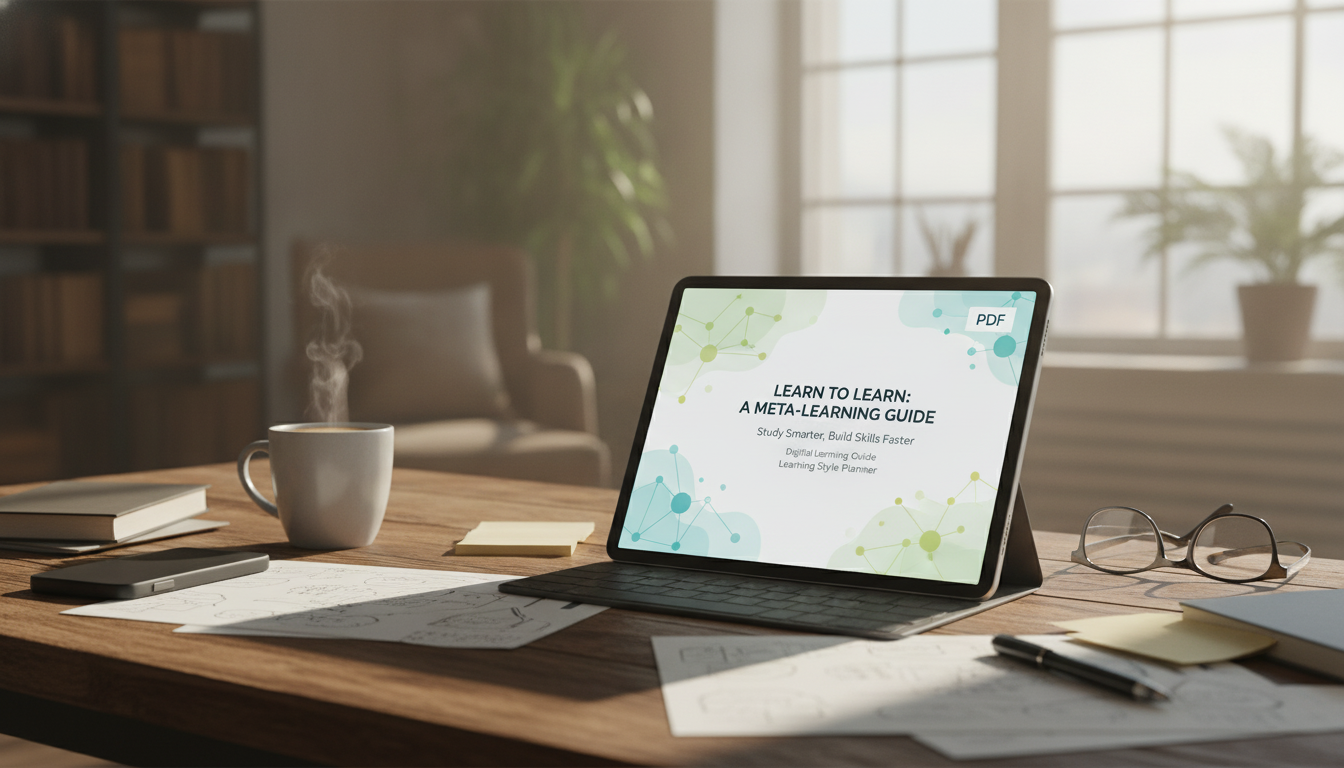
Learn to Learn: A Meta-Learning Guide for Better Studying, Faster Skill Building, and Clearer Progress
Better results rarely come from studying longer—they come from studying smarter. Meta-learning focuses on how learning works, then turns that awareness into repeatable habits: setting goals, choosing the right practice method, tracking what’s sticking, and adjusting quickly. A good system makes progress visible and reduces the “I studied, but nothing stuck” feeling by replacing guesswork with feedback.
If you want a ready-to-use structure, Learn to Learn: A Meta-Learning Guide (digital PDF and planner toolkit) is designed as a practical guide-and-planner combo: strategies, prompts, and planning pages that help turn studying into an iterative skill you improve every week.
What meta-learning is (and why it changes results)
Meta-learning is the skill of understanding and improving the way learning happens: planning, practicing, reviewing, and adapting. Instead of defaulting to vague effort (“study more”), it gives you specific levers to pull—like retrieval practice, better feedback, or fewer distractions—so your time produces measurable recall and performance.
The big advantage is that it works across subjects and skills: exams, languages, professional certifications, creative tools, and workplace training. A meta-learning approach also cuts wasted time early, because it helps you identify which methods actually improve accuracy, speed, and confidence—rather than what merely feels productive.
Research consistently supports core meta-learning-friendly techniques like retrieval practice and spaced repetition. For example, the American Psychological Association summarizes evidence that practice testing strengthens long-term retention (APA: Learning and Memory), and reviews of effective learning techniques highlight spaced practice and interleaving as high-impact methods (Dunlosky et al., 2013).
The toolkit: what’s inside and how to use it
A meta-learning system is easiest to maintain when it’s already formatted as a workflow. The Learn to Learn: A Meta-Learning Guide is built to help you run that workflow without reinventing it every week.
- Digital PDF learning guide for building a repeatable learning workflow from goal-setting through review cycles.
- Study strategies eBook section to help choose techniques based on the material and the deadline.
- Learning style planner pages for mapping preferences, constraints, and study conditions (time, environment, energy, attention).
- Self-development prompts for reflection: what worked, what didn’t, and what to change next session.
- Suggested setup: choose one skill or subject, define a 2–4 week target, then use the planner weekly and the reflection prompts after each study block.
For a smoother study setup on the go, consider pairing your planning routine with practical essentials like a reliable charger. The 200000mAh 120W Power Bank for iPhone and Apple Devices can help keep your phone or tablet alive through longer library sessions, commutes, or practice-test blocks.
A simple meta-learning cycle to follow each week
Use a repeatable cycle so every week becomes a small experiment that improves the next one. The goal isn’t perfection—it’s quick learning about your learning.
- Define outcomes: Specify what “done” looks like (solve 30 mixed problems, explain a concept without notes, pass a practice exam, complete a portfolio draft).
- Break down the skill: List subskills, prerequisites, and common failure points (misconceptions, weak recall, slow steps, frequent errors).
- Choose the practice type: Retrieval practice for recall, worked examples for brand-new problem types, spaced repetition for long-term retention.
- Add feedback: Self-check with answer keys, quizzes, peer review, or practice tests—feedback is what converts effort into correction.
- Review and adjust: Keep what moves the needle; reduce what feels productive but doesn’t improve performance.
Study strategies that pair well with a planner
High-impact methods to rotate
When to use common study methods
| Method | Best for | Quick example | Common mistake to avoid |
|---|---|---|---|
| Retrieval practice | Remembering and explaining | Write a summary from memory, then compare to notes | Rereading instead of recalling |
| Spaced repetition | Long-term retention | Review flashcards on a schedule | Cramming all reviews into one day |
| Interleaving | Problem selection under pressure | Mix algebra, geometry, and word problems | Grouping all similar problems together |
| Worked examples | Starting unfamiliar topics | Study 2 solved problems, then attempt 3 alone | Staying on examples too long |
| Practice tests | Exam readiness and timing | Take a timed quiz weekly | Avoiding tests due to low confidence |
Learning-style planning without the pitfalls
If you use audio-based review (recorded explanations, lecture playback, or focus soundscapes), protecting and organizing your earbuds helps reduce friction. The Silicone Case for Apple AirPods 4, AirPods Pro 2, AirPods 3 is a simple add-on that can keep a study routine from getting derailed by lost or damaged gear.
A 7-day starter plan to build momentum
Who this guide fits best
Get the digital guide and planner
If you want a reusable framework you can apply to any course, exam, or skill, start with Learn to Learn: A Meta-Learning Guide (digital PDF and planner toolkit). It works well for short sprints (1–2 weeks) and longer cycles (4–12 weeks) because it emphasizes review, feedback, and quick adaptation—so you keep improving the process that creates results.
FAQ
How is meta-learning different from regular studying?
Meta-learning focuses on planning, picking methods based on outcomes, measuring results, and adjusting quickly. Regular studying often defaults to rereading or highlighting without feedback, so it can feel busy without improving recall or performance.
Does a learning-style planner mean sticking to one learning style?
No—use it to plan around preferences and conditions (time, environment, focus), not rigid labels. Combining methods like retrieval practice, visuals, and targeted practice problems usually produces better transfer than relying on only one approach.
What’s the fastest way to see improvement with this toolkit?
Start with a quick baseline check, then do 3–4 short sessions using retrieval practice plus spaced review. Use weekly reflection to cut low-impact activities and double down on what measurably improves accuracy and recall.
















Leave a comment