Indoor Cat Enrichment: DIY Toys, Play Plans, Home Setup
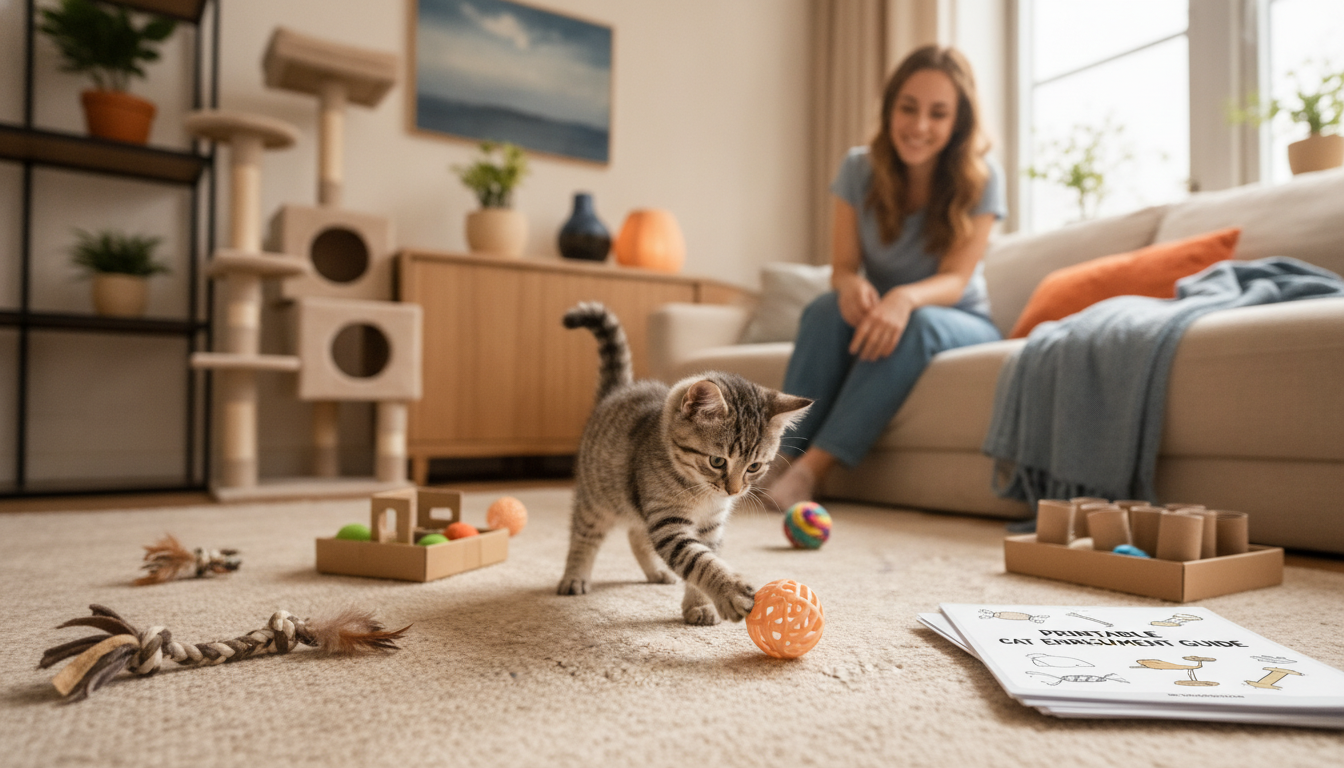
Enrichment Ideas for Indoor Cats: DIY Toys, Daily Play Routines, and a Cat-Friendly Home
Indoor cats thrive when their day includes hunting-style play, problem-solving, climbing, and calm spaces for recovery. The goal is a home setup and routine that reduces boredom, supports healthy movement, and channels natural behaviors like stalking, pouncing, scratching, and scenting—without turning the house upside down.
What “enrichment” means for an indoor cat
Enrichment isn’t a single toy or one “big” activity. It’s a blend of physical activity, mental challenge, sensory variety, and choice—meaning your cat has multiple places to rest, hide, climb, and observe.
The most effective enrichment supports a cat’s natural rhythm: hunt → catch → eat → groom → sleep. When play ends with a small meal or treat, many cats settle more easily because the sequence feels complete.
Common signs a cat needs more enrichment include nighttime zoomies, attention-demanding meowing, overgrooming, rough play, counter surfing, or boredom-related destructiveness.
Safety basics matter: avoid string ingestion, supervise feather/strings and ribbon toys, skip small parts that can be swallowed, and rotate toys so novelty stays high without leaving tempting hazards out 24/7. For deeper guidance, see the American Association of Feline Practitioners (AAFP) Feline Behavior Guidelines.
Set up a home that invites healthy movement
Indoor enrichment works best when it’s “built into” the environment, not added as an afterthought.
Create vertical territory
A cat tree near a window, wall shelves, or even a cleared bookcase level can become a favorite perch. Cats often feel safer and more engaged when they can look down on their space.
Build a simple “path”
Connect key resources so movement happens naturally: resting spot → perch → scratching post → puzzle feeder. When the route is predictable, cats move more without needing you to initiate every activity.
Offer scratching in multiple styles
Many behavior issues improve when scratching needs are met. Aim for at least: one tall vertical post, one horizontal cardboard scratcher, and one sturdy angled option. Put a scratcher where your cat already wants to scratch (yes, even if that’s next to the couch) and then shift it gradually.
Window enrichment with a “hide” option
A screened window, suction window perch, and a small box “blind” (a box with a side opening) let your cat watch the outside world while feeling protected. International Cat Care has a helpful overview of feline environmental needs: Environmental Needs of Cats.
Quiet retreat zones
Balance stimulation with recovery. A covered bed, a carrier left open as a resting cave, or a high shelf away from foot traffic gives your cat a place to decompress when the home is busy.
Simple daily play routines that fit real schedules
For many cats, 2–3 short sessions (5–10 minutes) work better than one long workout. Try pairing play with natural high-energy windows—often morning and evening—then end with a small meal or a few pieces of kibble.
Use “prey rules” to keep play satisfying: start slow, hide behind furniture, vary speed, and let your cat win often. A toy that’s never catchable can increase frustration and lead to nipping or frantic behavior.
Sample 7-Day Indoor Cat Enrichment Routine (10–25 minutes/day)
| Day | Morning (5–10 min) | Evening (5–15 min) | Low-effort add-on |
|---|---|---|---|
| Mon | Wand toy: slow stalk → pounce | Treat scatter in 2 rooms | New cardboard box with entrance hole |
| Tue | Laser play (end with a catchable toy) | Puzzle feeder or snuffle mat | Open window perch time (screened) |
| Wed | Kicker toy wrestling | Wand toy: “bird” flight near perch | Catnip/silvervine rotation |
| Thu | Ball track or hallway toss | Food “treasure hunt” in 3 spots | 10-minute clicker trick (sit/touch) |
| Fri | Ribbon or lure (supervised) | Scratcher + treat pairing | Paper bag (handles removed) |
| Sat | Climb/target practice to shelves | DIY foraging box | Brush + calm decompression |
| Sun | Choice-based play (offer 2 toys) | Interactive chase + small meal | Swap toy basket contents |
DIY toys and games using household items (safe versions)
Food-based enrichment: foraging, puzzles, and better mealtimes
Water enrichment can also help: offer multiple bowls, try a fountain, and test different materials (ceramic vs. stainless) to match your cat’s preferences. The ASPCA’s cat enrichment guidance is a solid reference for safe, practical ideas.
Sensory and mental enrichment without overstimulation
Common indoor-cat behavior problems and what to adjust
Nighttime activity
Scratching furniture
Biting during petting
Boredom meowing
Inter-cat tension
Printable guide for easy planning and rotation
For a ready-to-use format, see our Enrichment Ideas for Indoor Cats | Printable Cat Enrichment Guide | DIY Toys, Play Routines, and Cat-Friendly Home Tips.
To make daily sessions easier to run, some households also keep a dedicated device setup nearby: the 200000mAh 120W Power Bank for iPhone and Apple Devices can help keep a phone or tablet available for timers, clicker training cues, or short “cat TV” sessions. If you use earbuds during play prep, a protective option like the Leather Texture TPU Case for Apple AirPods 1/2/3/Pro can help keep small accessories stored safely away from curious paws.
FAQ
How much play does an indoor cat need each day?
Many indoor cats do well with about 10–30 minutes total per day, split into 2–3 short sessions. Adjust based on age and health, and end active play with a small meal or a few treats to complete the hunt cycle.
What are safe DIY enrichment toys for cats?
Low-risk options include large paper balls, cardboard box “paw hole” games, towel prey trails, and a well-sewn kicker pillow. Avoid loose strings, supervise any feather/ribbon-style items, and smooth sharp edges on DIY projects.
How can enrichment reduce nighttime zoomies?
Nighttime zoomies often improve when you add an evening play session that ends with food, mimicking hunt-catch-eat. Increasing daytime foraging and keeping morning routines predictable can also shift activity earlier in the day.















Leave a comment