Best 20W 10000mAh Power Bank for iPhone (Fast PD)
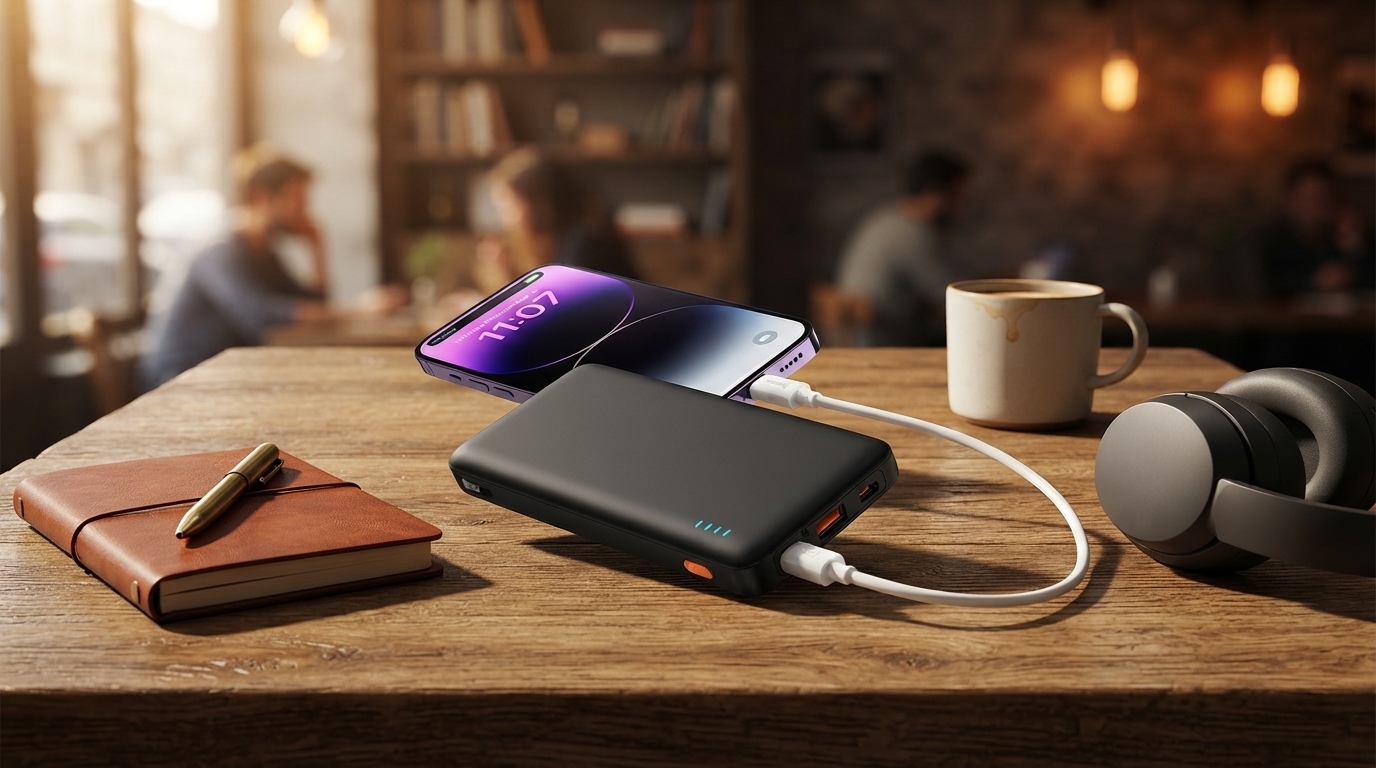
20W Fast Charging Power Bank 10000mAh for iPhone: Everyday Backup Power Without the Bulk
A compact 10000mAh power bank with 20W fast charging is a practical match for modern iPhones—enough capacity for daily top-ups, quick boosts between meetings, and reliable power on commutes and day trips. This guide breaks down what 20W means for iPhone charging, what 10000mAh realistically delivers, and the key details that matter for safe, consistent performance.
What 20W fast charging means for iPhone
A “20W” power bank is built to deliver a higher charging rate than older 5W adapters, which is why it’s often the sweet spot for fast, everyday iPhone charging. To see those faster speeds, the cable and port you use matter as much as the power bank itself.
- 20W output is designed to support iPhone fast charging when paired with a compatible cable (typically USB-C to Lightning for Lightning iPhones, or USB-C to USB-C for USB-C iPhones).
- Charging speed varies by iPhone model and battery level; the fastest rate is usually during the lower-to-mid battery range and slows down near full to protect battery health.
- For day-to-day use, 20W is a strong “quick top-up” tier—useful for short breaks when a standard 5W–12W charger feels too slow.
- If the power bank supports USB Power Delivery (PD), iPhones can negotiate the optimal charging profile automatically; if not, charging may fall back to lower wattage.
For a deeper look at how iPhone power adapters and charging behavior are handled, Apple’s support documentation is a reliable reference: Apple Support: About USB Power Adapters for iPhone. For the underlying standard behind many fast-charging setups, see: USB-IF: USB Power Delivery.
How much 10000mAh actually gives you
The “10000mAh” label describes the internal battery cell capacity (typically measured around 3.7V). After converting that stored energy to the 5V/9V outputs used for charging—and factoring in normal efficiency losses—usable power is lower than the headline number.
- A 10000mAh rating refers to the internal battery cell capacity (typically at ~3.7V). Usable output is lower after voltage conversion and normal efficiency losses.
- A realistic expectation for many 10000mAh power banks is roughly 60–75% of the labeled capacity delivered to the phone, depending on circuitry, cable quality, and charging speed.
- For most iPhone sizes, this often translates to about 1.5–2.5 full charges, with smaller models trending higher and larger “Plus/Pro Max” models trending lower.
- Frequent fast charging can slightly reduce efficiency compared to slower charging, but the convenience is often worth it for quick boosts.
Typical output expectations from a 10000mAh power bank
| Scenario | What to expect | Why it varies |
|---|---|---|
| Single iPhone top-up during the day | Several partial charges (multiple boosts) | Short sessions keep heat low and reduce tapering near 100% |
| Trying to reach 100% repeatedly | Fewer full charges than the label suggests | Phones slow charging near full and conversion losses add up |
| Fast charging at higher wattage | Convenience-focused, slightly lower efficiency | Higher power can increase heat and conversion overhead |
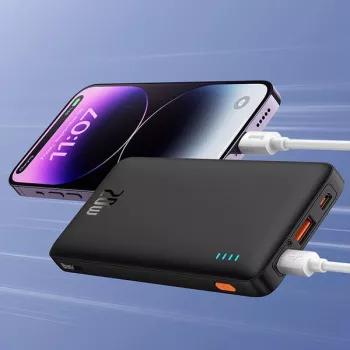
Product highlight: 20W Fast Charging Power Bank 10000mAh for iPhone 16/15/14/13/12
If the goal is everyday backup power that won’t weigh down a pocket or small bag, a 20W/10000mAh combination is built for that role. The 20W Fast Charging Power Bank 10000mAh for iPhone 16/15/14/13/12 is positioned as a daily-carry option—fast enough for meaningful boosts, with a capacity that makes sense for normal routines.
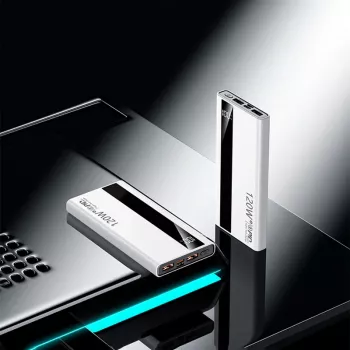
For a more “leave it in the trunk / emergency kit” style option, compare it to a higher-capacity listing like the 200000mAh 120W Power Bank for iPhone and Apple Devices—with the important reminder that very large capacity claims should be weighed against size, recharge time, and clearly stated specifications.
Ports, cables, and compatibility checks that prevent slow charging
If you’re building a compact “carry kit,” small protection accessories can help keep earbuds protected in the same pouch as charging gear, such as the Leather Texture TPU Case for Apple AirPods 1/2/3/Pro or the Silicone Case for Apple AirPods 4, AirPods Pro 2, AirPods 3.
Safety and battery care for longer lifespan
Choosing the right capacity: 10000mAh vs ultra-high-capacity options
Quick comparison: portable daily carry vs high-capacity backup
| Option | Best for | Tradeoffs |
|---|---|---|
| 20W 10000mAh class (daily carry) | Commuting, workdays, short trips, quick iPhone boosts | Fewer total recharges than large-capacity packs |
| Very high capacity (e.g., 200000mAh class listings) | Extended off-grid use or multiple devices (if specifications are credible) | Heavier, slower to recharge, higher scrutiny needed on safety/spec accuracy |
Practical travel tips for faster, more reliable charging
FAQ
Will a 20W power bank fast charge an iPhone?
Yes, as long as the power bank supports the right fast-charging standard (commonly USB Power Delivery) and you use a compatible cable. Speed depends on the iPhone model and battery level, and it slows down as the battery approaches 100%.
How many times can a 10000mAh power bank charge an iPhone?
Typically about 1.5–2.5 full charges, depending on the iPhone’s battery size and normal conversion losses. Expect fewer full charges if you repeatedly charge to 100% or charge multiple devices from the same power bank.
What cable should be used for iPhone fast charging from a power bank?
For Lightning iPhones, use a USB-C to Lightning cable. For USB-C iPhones, use a USB-C to USB-C cable that supports Power Delivery; low-quality cables can reduce speed or cause unstable charging.













Leave a comment