Wooden Cat Tree Tower with Hidden Litter Box & Posts
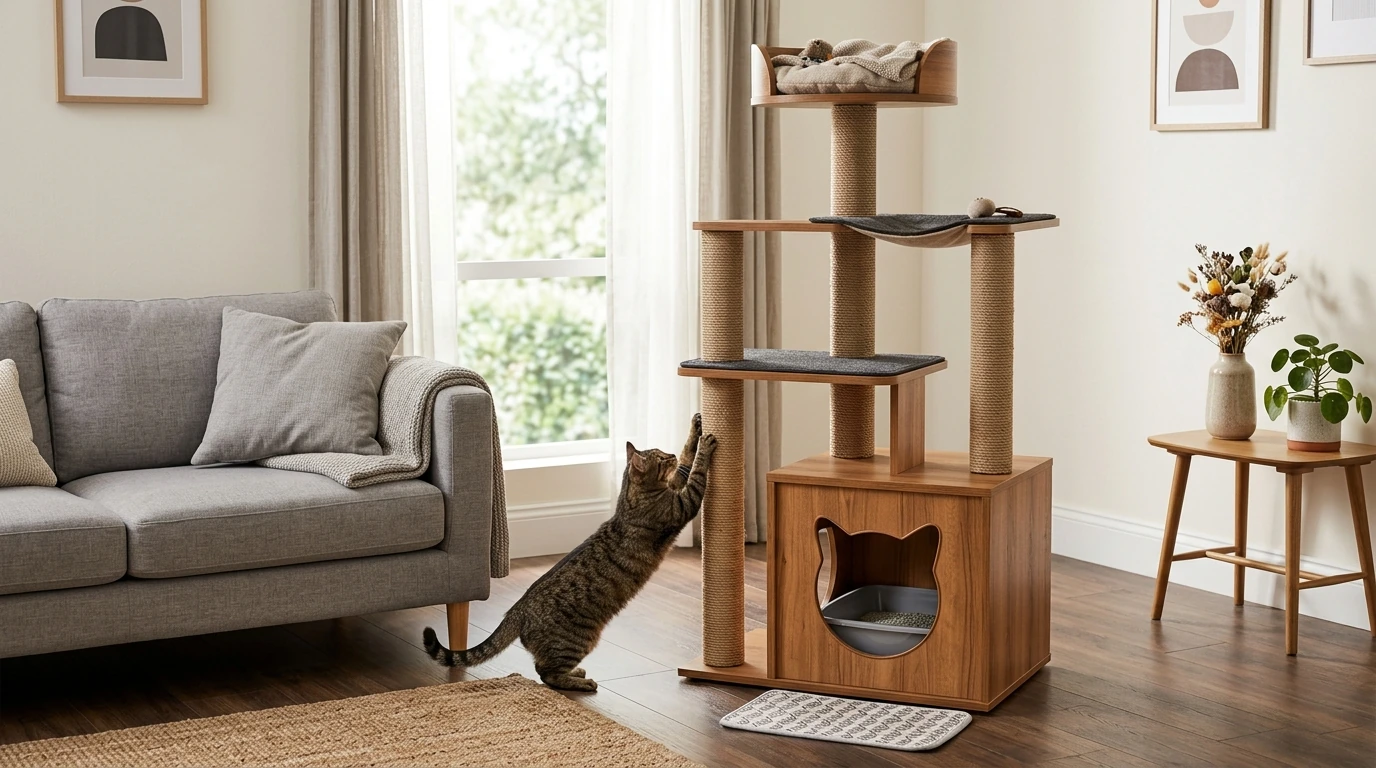
Deluxe Wooden Cat Tree Tower with Built-In Litter Box & Scratching Posts
A cat’s home base should do more than look good—it should support daily routines: climbing, scratching, hiding, and using the litter box without turning the whole room into a “cat corner.” Our Deluxe Wooden Cat Tree Tower with Built-In Litter Box & Scratching Posts is designed to bring those needs into one tidy vertical setup, helping you keep floors clearer, visual clutter lower, and your cat more confidently occupied.
What this tower replaces in a typical cat setup
If you’ve ever felt like cat gear expands to fill whatever space you give it, you’re not alone. A combined tower-and-litter solution can simplify your layout while still respecting what your cat naturally wants to do each day.
- A separate cat tree plus a separate litter box zone—by bringing both into a single footprint.
- Extra scratch pads and furniture “sacrifice areas,” thanks to built-in scratching posts.
- Loose clutter around the box (mats, guards, makeshift screens) by giving the litter area a dedicated enclosed home.
- The constant reshuffling of cat furniture, by offering a stable, intentional hub your cat can claim.
Why wood matters for everyday living
Wooden, furniture-style cat towers tend to “read” as part of your home instead of a temporary pet add-on. That difference is practical as well as aesthetic—especially when you’re also housing a litter area inside the unit.
- A cleaner-looking profile: wood furniture-style towers blend into living areas more naturally than purely carpeted cat trees.
- Easier wipe-downs around the litter zone compared with soft, fully upholstered bases that can trap dust and hair.
- A sturdier feel for active climbers—helpful for cats that launch, chase, and bounce between levels.
- A more “finished furniture” approach for homes that want cat essentials to feel intentional, not temporary.
Home-fit checklist for a combined cat tower + litter box cabinet
| Consideration | What to check at home | Why it helps |
|---|---|---|
| Placement | Put it where your cat already prefers to scratch or climb, and near (not next to) the current litter spot | Supports habit-building without forcing a sudden routine change |
| Traffic | Avoid noisy bottlenecks and door-slam areas | Cats use the box more reliably when they feel secure |
| Flooring | Use a washable mat in front of the entry | Reduces tracking and protects floors |
| Multi-cat homes | Confirm every cat has a comfortable route in/out without being ambushed | Prevents guarding and stress around the litter area |
| Cleaning access | Ensure there’s room to open panels/doors and lift the litter pan | Makes daily scooping and weekly refresh realistic |
Built-in litter box space: keeping routines calmer and rooms cleaner
An enclosed litter area doesn’t eliminate the need for good litter habits, but it can make the whole situation easier to live with. The goal is a predictable, private zone for your cat—and a more contained footprint for you.
- A dedicated enclosed zone can reduce visual mess and help contain scatter around the box entrance.
- A predictable “private” spot often encourages more confident use—especially for shy cats.
- Better room organization: the litter area stays within the tower footprint instead of expanding across the floor.
- Set the space up for success: low-dust litter, a scoop station nearby, and a washable mat at the entry.
For additional best practices on litter location and common litter-box pitfalls, we recommend guidance from International Cat Care (iCatCare) and the ASPCA.
Scratching posts included: protect furniture by offering better options
Scratching isn’t misbehavior—it’s normal body care and communication. The fastest path to saving your sofa is usually not “more scolding,” but “better scratching options” placed where your cat actually wants them.
- Scratching is normal maintenance behavior; cats need sturdy resistance to fully stretch and mark.
- Place the tower where scratching already happens to redirect behavior faster than moving it to a low-use corner.
- Refresh the appeal by occasionally wiping posts with a clean cloth and keeping the area free of competing scratch targets.
- For households with both climbers and loungers, a vertical scratch surface plus climbing levels can cover multiple preferences.
Daily use tips: setup, transition, and simple maintenance
When you introduce a combined tower + litter cabinet, the best results come from keeping the change gentle and predictable. Cats notice small differences in smell, texture, and “escape routes,” so a smooth transition matters.
For broader, vet-backed cat care references, the AVMA’s cat care resources are a solid starting point.
Who this tower is ideal for
In-stock picks from our team
- Deluxe Wooden Cat Tree Tower with Built-In Litter Box & Scratching Posts
- Wireless Bluetooth Backlit Number Pad for Apple Devices
- Mini Pocket DAB/DAB+ FM Radio MP3 Player with Speaker & Rechargeable Battery
FAQ
Will an enclosed litter area make odors worse?
An enclosure can help contain scatter and reduce visual mess, but odor control still depends on frequent scooping, an appropriate litter choice, good room ventilation, and regular cleaning of the litter area.
How do cats adjust to a litter box inside a tower?
Most cats do best with a gradual transition: add familiar litter, let your cat explore at their pace, keep the old box available temporarily, and avoid forcing use—especially for shy cats in busy homes.
Is this a good choice for multi-cat homes?
It can be, as long as you prevent guarding: keep entry/exit paths clear, avoid tight corners, monitor interactions, and remember some households still do best with multiple litter locations based on cat dynamics.













Leave a comment