Quiet Bladeless Desk Fan: 3 Speeds, Touch Control
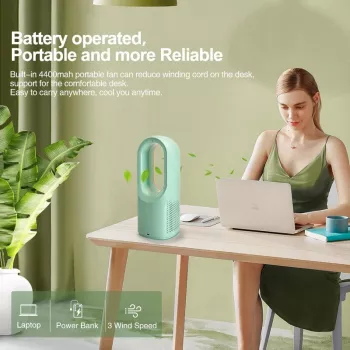
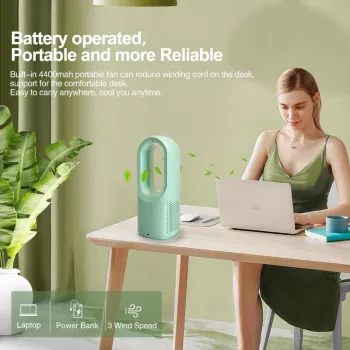
Portable Bladeless Desk Fan with 3 Cooling Speeds – Quiet Touch Control Fan for Bedroom
A compact desk fan can make warm rooms more comfortable without taking over the nightstand or workspace. This portable bladeless design focuses on smooth airflow, simple touch controls, and three speed settings—aimed at quiet, everyday cooling for bedrooms, desks, dorm rooms, and other small living spaces. If you’re looking for a streamlined option for personal comfort, the Portable Bladeless Desk Fan with 3 Cooling Speeds – Quiet Touch Control Fan for Bedroom is built around easy placement and low-distraction use.
Quick look: what this fan is designed to do
- Provide personal cooling on a desk, bedside table, or dresser
- Offer three speed levels to match temperature changes through the day or night
- Use a bladeless airflow style for a cleaner look and easier surface wipe-down
- Reduce disturbance during rest with a quiet-running approach
It’s best thought of as a “comfort helper” for one person’s immediate area—especially helpful when central air doesn’t reach a bedroom evenly or when a home office warms up during screen time.
Bladeless airflow: comfort without exposed blades
Bladeless fans are popular for tight bedside setups because the design removes the worry of accidental contact with spinning blades. While any fan needs sensible placement, a bladeless housing can feel more reassuring around kids, pets, or crowded nightstands.
- Bladeless housing helps avoid direct contact with spinning fan blades, which can be useful around kids, pets, or tight spaces
- Airflow often feels more even and less choppy than some small bladed fans, which can be more comfortable for bedside use
- Easier to clean the exterior—no need to remove a front grille to wipe visible blades
For many bedrooms, that smoother “wash” of air is the difference between feeling comfortably cooled and feeling like gusts are constantly waking you up.
Three cooling speeds: when to use each setting
Room conditions change quickly—sunlight warms a small room, a laptop adds heat at a desk, or nighttime humidity makes a space feel stuffier. Three speeds make it easier to match the moment rather than settling for “too weak” or “too strong.”
- Low: gentle airflow for sleeping, reading, or light cooling when the room is only slightly warm
- Medium: balanced setting for everyday desk work or evening wind-down
- High: stronger personal cooling for hot afternoons, post-workout cooldowns, or stuffier rooms
Tip: Start on high for a few minutes to flush warm air around the bed area, then drop to low for steady comfort. If you’re also trying to keep energy use practical, the U.S. Department of Energy’s guidance on efficient home cooling is a useful reference for combining fans with smart ventilation habits: Cooling your home efficiently.
Touch control: simple adjustments in the dark
When a fan lives on a nightstand, the control method matters. Touch controls help you make quick changes without searching for a small dial or clicking a switch repeatedly.
- Touch interface enables quick changes without fiddling with small knobs
- Useful for bedside placement when quick, quiet speed changes matter
- Wipe-to-clean surface helps keep controls looking neat over time
For a calmer bedside setup, pairing a quiet fan with low-key nighttime audio can also help mask incidental household sounds; a compact option like the Mini Pocket DAB/DAB+ FM Radio MP3 Player with Speaker & Rechargeable Battery can complement a wind-down routine without adding clutter.
Noise and bedroom comfort
Noise sensitivity varies, but most people notice that lower speeds tend to blend into the background more easily. For restful use, a fan is most helpful when it supports comfort without drawing attention to itself.
- Quiet operation is most noticeable on lower speeds, where airflow is steady and less intrusive
- For sensitive sleepers, aim the fan so air circulates around the bed instead of blowing directly at the face
- Pair with breathable bedding and consistent room ventilation for more stable overnight comfort
Temperature also plays a role in sleep quality. For general bedroom comfort considerations, the Sleep Foundation’s discussion of sleep-friendly bedroom temperature can be helpful context: Best temperature for sleep.
Where to place a desk fan for better circulation
Small fans work best when placement supports circulation instead of blasting air straight at you. A few inches and a slight angle change can make airflow feel more comfortable and less drying.
During heat waves, it’s also important to follow credible heat safety guidance—especially for children, older adults, and anyone with health risks. See the CDC’s heat and health resources for practical tips: CDC heat and health guidance.
Safety and maintenance basics
Specifications and at-a-glance features
| Feature | Details |
|---|---|
| Fan type | Bladeless desk fan |
| Speed settings | 3 cooling speeds |
| Controls | Touch control interface |
| Best for | Bedroom, desk, dorm rooms, small spaces |
| Comfort focus | Quiet operation for low-distraction cooling |
| Portability | Compact size for moving between rooms |
Who this fan fits best
Bladeless desk fan vs. small bladed fan
FAQ
Is a bladeless desk fan safe to use around kids and pets?
A bladeless design has no exposed spinning blades, which can reduce the chance of accidental contact. For best safety, keep the fan on a stable surface and make sure intake and exhaust openings stay unobstructed.
Which speed is best for sleeping?
Low speed is usually the most sleep-friendly because it tends to be quieter and less drying. For added comfort, aim airflow past the bed so air circulates around you instead of blowing directly at your face.
How should a desk fan be positioned for the best cooling in a bedroom?
Place it on a nightstand or dresser and angle the airflow to promote circulation across the room. Positioning near a doorway or an open window in the evening can also help move cooler air through the space.













Leave a comment