Open-Ear Bone Conduction Earphones: Bluetooth 5.3 HD Calls
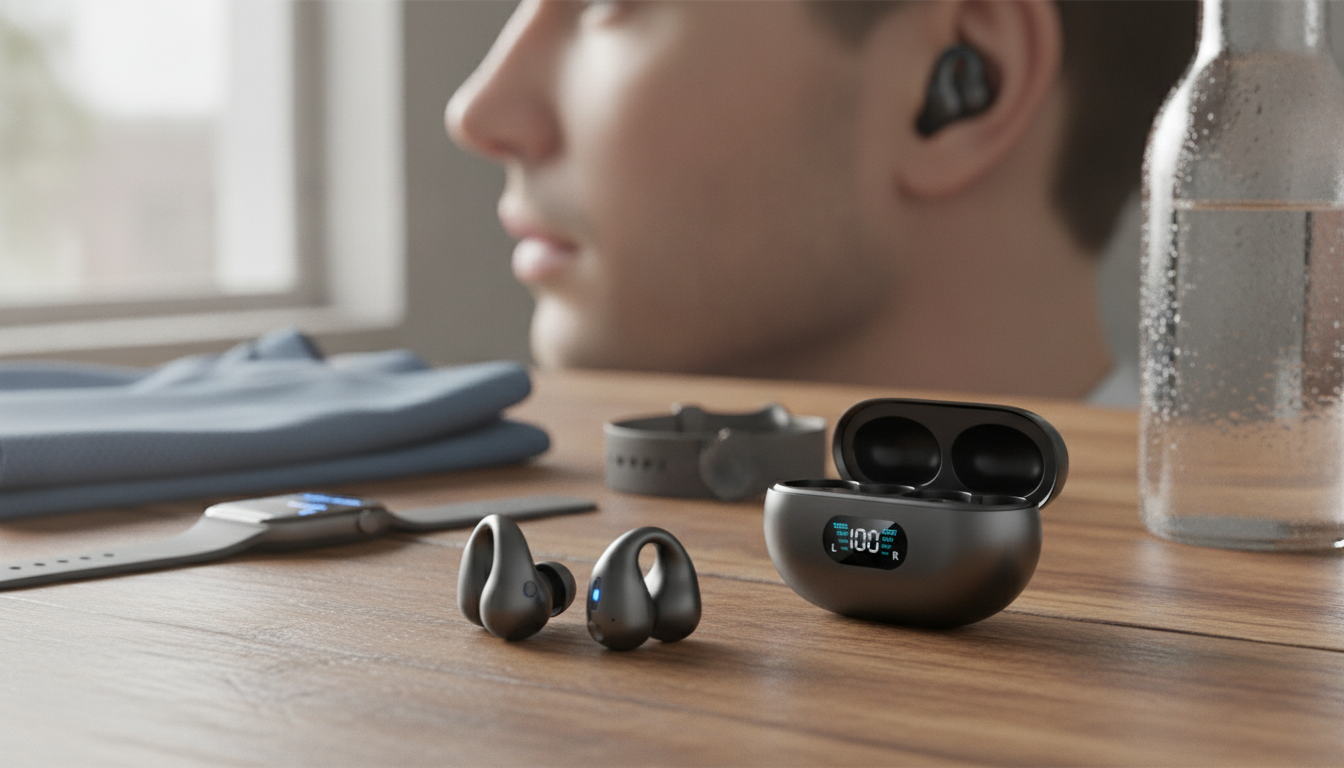
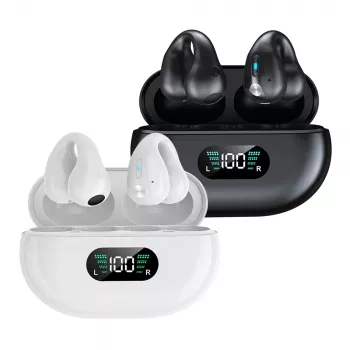
Wireless Bone Conduction Bluetooth 5.3 Earphones with HD Call & Noise Reduction
Bone conduction earphones keep the ears open while sending audio through gentle vibrations along the cheekbone. That makes them a practical pick for outdoor activity, commuting, and long calls where it’s helpful to stay aware of what’s happening around you. This model combines the convenience of wireless listening with Bluetooth 5.3 stability and HD-call focused noise reduction to keep conversations clearer while you’re on the move.
What Bone Conduction Listening Feels Like
Instead of sealing your ear canal like traditional earbuds, bone conduction transducers rest near the cheekbone and transmit sound through vibration. The biggest day-to-day benefit is that your ears remain open, so you can still hear traffic, station announcements, coworkers, or a family member calling your name.
- Open-ear design helps maintain awareness of surroundings during workouts, commutes, and errands.
- Fit matters: the contact point and pressure can change perceived loudness and bass.
- Often more comfortable for people who dislike in-ear tips, especially during long wear.
- Great for calls, podcasts, and everyday listening; not intended to replace sealed isolation in very noisy environments.
Bluetooth 5.3 Connection and Everyday Range
Bluetooth 5.3 is designed to improve connection efficiency and stability, especially in places where many devices are competing for wireless space—think apartment buildings, busy sidewalks, or a packed gym. In real life, that typically translates to fewer hiccups and smoother streaming as you move through your routine.
- Bluetooth 5.3 is built for efficient connections and improved stability in busy wireless environments (see the Bluetooth Core Specification for technical standards).
- Quick reconnection after moving out of range supports stop-and-go days (gym, errands, commuting).
- Useful for phone calls and streaming without feeling tethered to your device.
- Phone model and OS affect pairing reliability; keeping firmware and your OS updated can help reduce dropouts.
HD Call Quality and Noise Reduction
Call clarity is where open-ear designs can shine: you can hear your environment while still holding a conversation, and this model’s noise reduction is tuned to make speech more intelligible when distractions pop up. It’s especially helpful when background noise changes constantly—like walking past traffic, boarding transit, or moving between rooms.
- Noise reduction targets common distractions like wind and background chatter to help keep speech understandable.
- Most effective when mic areas aren’t covered and you speak in a natural, direct tone.
- Helpful for walking calls, transit stations, and shared workspaces where noise levels fluctuate.
- For best results: lower music volume during calls, avoid covering the mic area, and step to a calmer spot when possible.
Comfort, Fit, and Long-Wear Use
Because open-ear bone conduction doesn’t sit inside the ear canal, many users find it easier on the ears during long listening sessions. There’s less pressure buildup, and you’re not constantly adjusting tips for a seal. The tradeoff is that position becomes your “volume knob”—a small adjustment can make a big difference.
- Open-ear styles can reduce ear canal fatigue and pressure some people feel with earbuds.
- A stable fit matters more than “deep insertion”; tiny shifts can change loudness and bass perception.
- Often works well with glasses when the frame arms don’t press on the cheekbone contact point.
- After workouts, a quick wipe-down helps maintain comfort and hygiene.
When Open-Ear Audio Is (and Isn’t) the Best Choice
Open-ear audio is ideal when awareness is part of the job—hearing your surroundings while still getting directions, taking calls, or enjoying a podcast. In louder places, however, you may find yourself turning volume up to compete with the environment. For hearing safety, it’s worth following common-sense guidance on limiting exposure to loud sound (NIOSH offers a helpful overview on noise and hearing protectors).
Open-Ear Bone Conduction vs. In-Ear Earbuds
| Feature | Bone conduction (open-ear) | In-ear earbuds (sealed) |
|---|---|---|
| Situational awareness | High (ears stay open) | Lower (ear canal is blocked) |
| Noise isolation | Low | Medium to high (varies by tips/ANC) |
| Comfort for long wear | Often high, no ear-tip pressure | Varies; can cause ear fatigue for some |
| Call experience in noisy places | Good with effective noise reduction, but environment still audible | Often strong if mic/ANC are good; may isolate the user more |
| Best use cases | Outdoor activity, multitasking, commuting | Travel, noisy spaces, focused listening |
Quick Setup and Daily Care
Setup is typically straightforward, and a few small habits can keep performance consistent over time.
Product Snapshot
If open-ear awareness and clearer calls are the priority, the Wireless Bone Conduction Bluetooth 5.3 Earphones with HD Call & Noise Reduction deliver a simple, lightweight way to stay connected while staying aware.
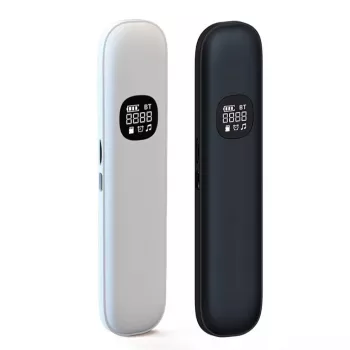
For a simple accessory pairing, consider an Apple Watch Silicone Sport Strap for comfortable all-day wear during walks and workouts. For offline listening between calls and streams, the Mini Pocket DAB/DAB+ FM Radio MP3 Player with Speaker & Rechargeable Battery is a handy grab-and-go option.
FAQ
Do bone conduction earphones work for phone calls in noisy places?
They can, especially when paired with noise reduction that helps speech stand out from background sound. Very loud environments can still affect clarity, so it helps to face away from wind, keep mic areas unobstructed, and step to a calmer spot when possible.
Will other people hear my audio with open-ear bone conduction?
Some sound leakage can happen, particularly at higher volumes or in quiet rooms. Keeping volume at a moderate level and being mindful in shared spaces helps reduce how much others can hear.
Are bone conduction earphones comfortable with glasses?
Many users find them comfortable with glasses, but the feel depends on frame thickness and where the transducers rest along the cheekbone. Small position adjustments usually help you find a pressure-free spot that stays stable.













Leave a comment