Daily Boost Checklist: Track Energy, Plan Focus, Reset
Your AI-Powered Daily Boost Checklist: Energy Tracking, Focus Planning, and a Simple Routine Reset
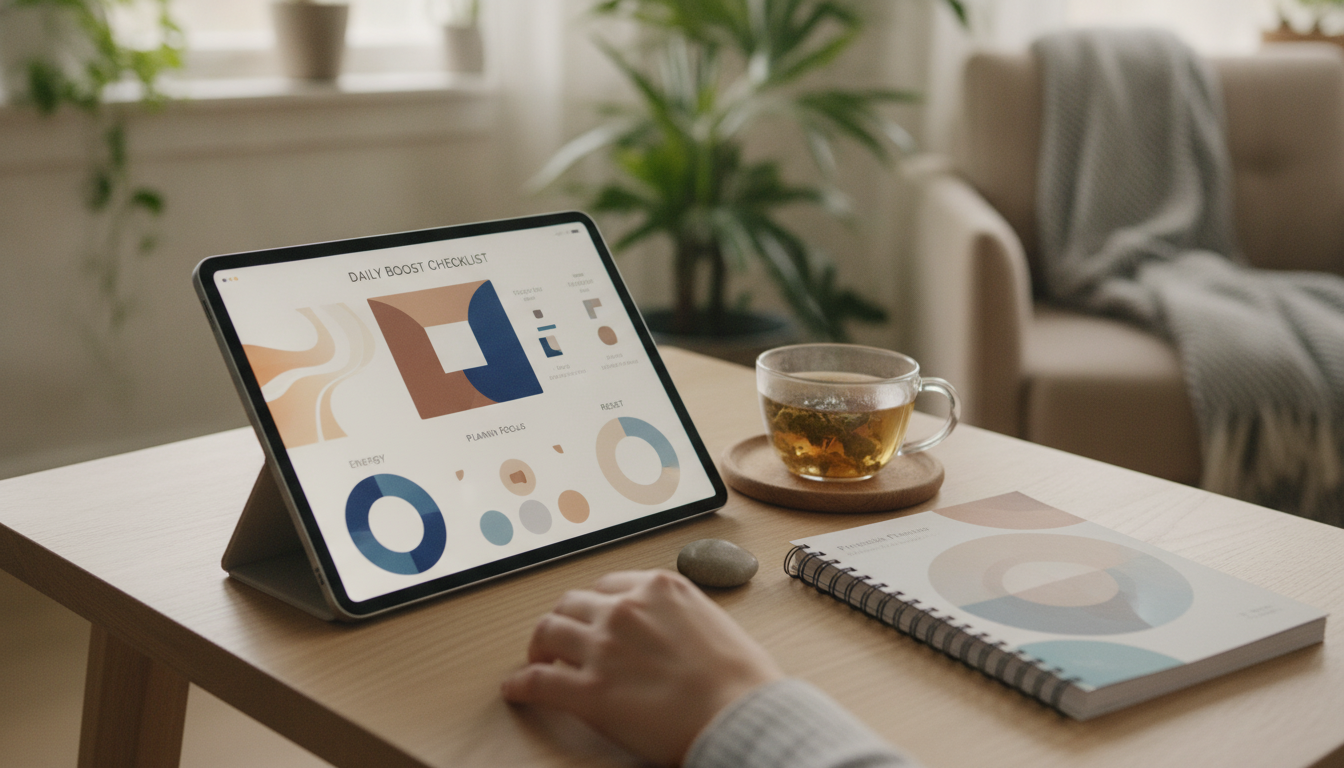
Busy days feel easier when energy, priorities, and recovery are visible. This printable-and-digital checklist pairs an energy tracker with a productivity planner and wellness prompts, helping turn daily choices into a repeatable rhythm—without overcomplicating the day.
Instead of pushing through on willpower alone, the page helps you notice when you naturally have the most mental fuel, plan around real-life energy shifts, and build a small “reset” routine for the moments when the day goes sideways.
What the Daily Boost Checklist Helps You Do
- Spot energy patterns across the day (morning, midday, afternoon, evening) instead of guessing.
- Translate energy reality into a workable plan: high-focus tasks at peaks, low-lift tasks at dips.
- Build a short routine that supports stamina: hydration, movement, meals, breaks, and wind-down.
- Reduce decision fatigue with a single page that guides the next best step.
- Create a quick “reset” pathway for days that start off-track.
If the goal is more consistency (not perfection), a checklist format makes follow-through easier than a blank page—especially on days when motivation is low but the schedule is full.
A 10-Minute Daily Workflow (AM to PM)
This checklist works best when it’s touched briefly several times, rather than filled out once in a long sitting.
- Morning (2 minutes): rate current energy, choose 1–3 priorities, and pick one easy “momentum” task.
- Midday (2 minutes): check energy again; schedule a short break or light movement if energy drops.
- Afternoon (3 minutes): assign deep work only if energy is high; otherwise batch admin, emails, and errands.
- Evening (2 minutes): note what restored energy today and what drained it; decide one adjustment for tomorrow.
- End-of-day (1 minute): close with a small win and a simple wind-down cue (screen-off time, stretch, reading).
Quick-start rhythm: match tasks to energy
| Energy level | Best task types | Support action | Example |
|---|---|---|---|
| High | Deep focus, creation, problem solving | Protect time blocks; silence notifications | Write, design, strategy, studying |
| Medium | Planning, collaboration, reviews | Short breaks; light snack/hydration | Meetings, editing, outlining |
| Low | Low-stakes admin, tidying, prep | Walk, sunlight, breathing, reset | Email cleanup, scheduling, file sorting |
Energy Tracking That Stays Practical
Energy tracking doesn’t need to become another project. The checklist keeps it simple so you can learn quickly and adjust without overthinking.
- Use a simple 1–5 rating or color scale to keep logging fast.
- Track just a few influences that commonly affect stamina: sleep quality, hydration, movement, meals, stress load.
- Note one “drain” and one “restore” factor daily to make patterns obvious within a week.
- Avoid overtracking: consistency beats detail for behavior change.
- Review weekly to adjust routines (bedtime, meal timing, break cadence) based on real trends.
If sleep is the main driver, small improvements can have an outsized effect on focus and mood. Credible guidance on sleep basics is available from the Centers for Disease Control and Prevention and Harvard Health Publishing.
Turning Priorities Into a Plan You Can Finish
Many plans fail because they ignore energy and overestimate available attention. This checklist nudges you toward a plan that still works when the day gets noisy.
- Pick one outcome that matters most today; treat everything else as supportive.
- Use a “must / should / could” list to prevent overload.
- Time-box the top task into a short sprint (25–45 minutes) so starting is easier.
- Plan one recovery block on purpose (walk, stretch, snack, quiet time) to prevent late-day crashes.
- Add a contingency: if energy falls, switch to a pre-chosen low-energy task instead of forcing focus.
That contingency is the difference between “I’m behind, so I’ll scroll and panic” and “I’m low, so I’ll do my low-energy list and protect tomorrow’s momentum.”
Wellness Prompts That Support Productivity (Without Becoming Another Job)
The wellness side stays lightweight on purpose: short cues that stabilize energy without turning the day into a rigid routine.
Even brief activity breaks can support energy and overall health; the World Health Organization’s physical activity guidance reinforces that movement across the week adds up.
Printable vs Digital: Simple Ways to Use It
For a smooth digital setup, pairing the planner with a fast input accessory can reduce friction during quick check-ins. A compact option like the Wireless Bluetooth Backlit Number Pad for Apple Devices can make ratings and time blocks feel more “tap-and-go.”
What’s Included and Who It’s For
Your AI-Powered Daily Boost Checklist is designed for quick daily use with guided prompts that connect energy to planning.
If wearable reminders help you follow through on movement or wind-down cues, a simple comfort upgrade like an Apple Watch Silicone Sport Strap can make all-day wear and quick check-ins more comfortable.
Getting Started Today
FAQ
Is this checklist better as a printable or a digital planner?
Printable is ideal if you want fast checkmarks at a desk with zero screen time, while digital works well if you’re on the go and want searchable records. Many people use a hybrid: print daily pages, then capture a few weekly takeaways digitally.
How long does it take to fill out each day?
Most days take about 5–10 minutes total, spread across quick check-ins. On busy days, the minimum effective version is about 2 minutes: an energy rating and a single top priority.
Will it work if energy levels change unpredictably?
Yes—use the multiple checkpoints to adapt in real time, and keep a short list of preselected low-energy tasks to switch to without debate. The reset prompts are built for flexibility so the plan can change without the day falling apart.














Leave a comment