Travel Scam Awareness & Digital Safety Checklist
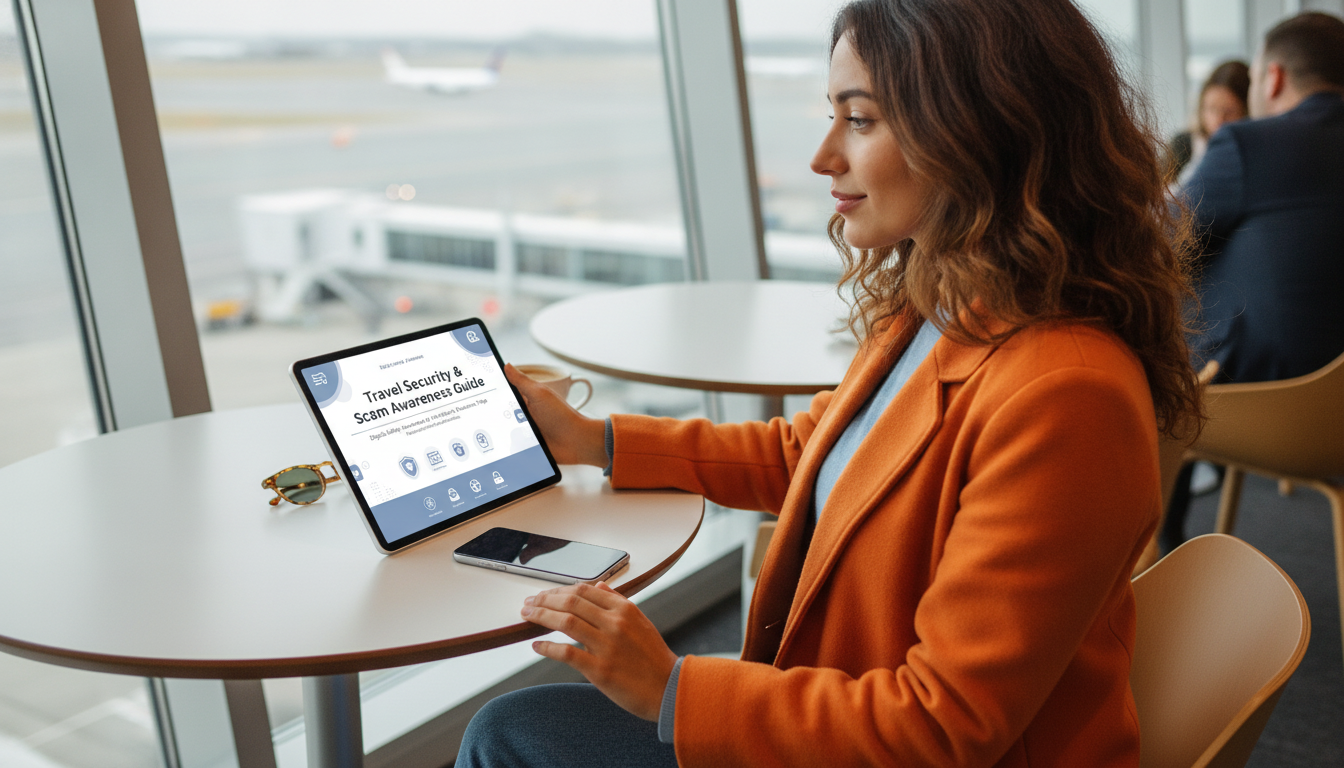
Travel Security & Scam Awareness: A Digital Safety Handbook for Tourists, Solo Travelers, and Business Trips
Travelers face a predictable mix of risks: opportunistic theft, social engineering, payment fraud, and device compromise—often amplified by unfamiliar places, time pressure, and connectivity needs. This handbook-style guide focuses on practical prevention steps before departure, in transit, and on the ground, with special notes for solo travelers and business trips where phones, accounts, and documents carry higher stakes.
Threats That Target Travelers Most Often
- Social engineering: friendly strangers create urgency (a “missed train,” sudden “police” checks, a broken meter, or a “hotel” call) to extract money, credentials, or access to your device.
- Theft patterns: distraction teams, bag hooks/cut straps, phone snatches near transport hubs, and “helpful” handlers at ATMs or ticket kiosks.
- Digital exposure: public Wi‑Fi, compromised chargers/cables, shoulder surfing, and SIM/OTP interception when your number is visible or your phone is unlocked.
- Payment fraud: card skimmers, fake QR menus, unauthorized tips/charges, and pressure to accept “dynamic currency conversion” at terminals.
- Document leverage: passport/ID photos, booking references, and loyalty accounts used for impersonation, refund diversion, or account takeovers.
Before Departure: Lock Down Accounts, Devices, and Documents
Make your phone hard to steal—and useless if stolen
- Use a long passcode (not 4 digits), enable biometrics, set a short auto-lock time, and confirm encrypted backups are working.
- Verify device tracking is active (like “Find My” or your Android equivalent) and test remote lock from another device.
Harden accounts you can’t afford to lose
- Switch to unique passwords and app-based 2FA where possible (SMS is easier to intercept during travel disruptions).
- Store recovery codes offline (printed and kept separate from your wallet), and confirm your recovery email/phone are current.
Use a “travel identity” to reduce blast radius
- Create a travel email alias for bookings and local signups, and avoid printing extra personal details on documents.
- Remove your home address from luggage tags; use an email address or phone number only if necessary.
- Avoid posting boarding passes or reservation screenshots—barcodes and confirmation numbers can be misused.
Reduce attack surface before you land
- Uninstall unused apps, disable Bluetooth auto-join, and limit lock-screen notifications (especially message previews).
- Review which apps can access contacts/files; travel often requires quick installs—keep permissions tight.
Pack a response kit (so you don’t improvise under pressure)
- Carry printed emergency contacts, bank numbers, and the nearest embassy/consulate details.
- Keep copies of IDs stored securely (not just in your camera roll) and know how to rapidly freeze cards.
On the Move: Airports, Stations, Ride-Hails, and Hotel Check-In
Safe Connectivity: Wi‑Fi, eSIM/SIM, and Charging Without Compromise
Common Scams and Fast Countermoves
Quick Guide to Common Travel Scams and What to Do
| Scenario | How it works | Safer response |
|---|---|---|
| Fake Wi‑Fi network | A hotspot mimics a trusted name and captures logins or redirects to phishing pages | Use mobile data or confirm the SSID with staff; avoid logging into email/banking on public Wi‑Fi |
| ATM “help” or distraction | Someone offers assistance, blocks view, or swaps cash/cards | Use ATMs inside banks; cover keypad; cancel and leave if approached |
| QR code menu/payment trap | A sticker overlays a real code and sends to a fake payment page | Ask for a printed menu or official URL; verify merchant name before paying |
| “Police” or “inspection” shakedown | Authority impersonation pressures for on-the-spot fines or phone checks | Ask to go to the nearest station; do not unlock the phone; request ID and document details |
| Taxi meter or route manipulation | Inflated fares via rigged meters or long routes | Use reputable ride-hail or pre-agreed fare; track route discreetly |
Solo Traveler and Business Trip Notes
If Something Goes Wrong: A Simple Incident Checklist
A Practical Toolkit for Safer Travel
- A compact checklist-style resource reduces decision fatigue on transit days and late-night arrivals. Consider keeping a reference copy of the Travel Security & Scam Awareness Guide | Digital Safety Handbook for Tourists, Solo Travelers & Business Trips in your trip docs.
- Reliable power supports safer choices: keeping maps available, using mobile data over risky Wi‑Fi, and avoiding unknown public USB ports. A high-capacity option like the 200000mAh 120W Power Bank for iPhone and Apple Devices can help you stay off sketchy charging stations.
- Protective accessories keep key devices usable during long travel days. If you travel with earbuds, a simple case like the Leather Texture TPU Case for Apple AirPods 1/2/3/Pro helps reduce accidental drops and last-minute replacements.
More Safety References (Authoritative Sources)
- U.S. Department of State — International Travel (Safety and security information)
- Federal Trade Commission — Scams and consumer advice
- CISA — Mobile device security and general cybersecurity guidance
FAQ
Is public Wi‑Fi safe for travel banking and work logins?
Public Wi‑Fi increases the risk of fake hotspots, phishing redirects, and traffic interception. Use mobile data or a personal hotspot for sensitive logins, and disable auto-join so your device doesn’t reconnect to lookalike networks.
What should be done first if a phone is stolen while traveling?
Lock the device immediately with your device locator and contact your carrier to block the SIM. Then revoke active account sessions, change passwords for email and banking from a trusted device, and freeze payment cards tied to the phone.
How can solo travelers reduce the chance of being targeted by scams?
Limit what you share in real time (location, lodging details, arrival times) and verify rides/hotel calls using official channels. Meet in public places, keep critical items on-body, and use scheduled check-ins so unexpected silence is noticed quickly.














Leave a comment